How Artificial Intelligence Is Transforming Cancer Diagnosis
Cancer remains one of the most complex diseases to diagnose and treat. Early detection is often the most important factor in improving survival rates, yet identifying cancer in its early stages can be extremely challenging. Traditional diagnostic methods rely heavily on medical imaging, laboratory tests, and the expertise of trained doctors. While these methods are effective, they can sometimes be time-consuming and subject to human limitations. In recent years, Artificial Intelligence (AI) has begun transforming the way cancer is detected and diagnosed, offering new possibilities for faster, more accurate, and more personalized medical care.
Artificial Intelligence refers to computer systems designed to perform tasks that normally require human intelligence. These systems can analyze large amounts of data, recognize patterns, and make predictions based on complex information. In the field of medicine, AI has become a powerful tool for assisting doctors in interpreting medical images, analyzing genetic data, and identifying early warning signs of disease.
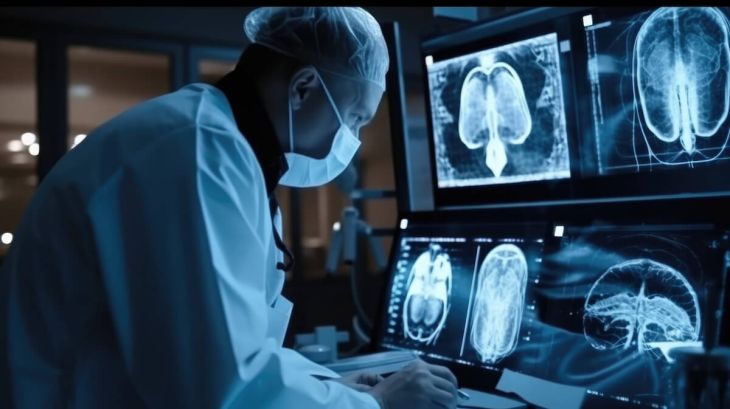
One of the most important areas where AI is making an impact is medical imaging. Techniques such as X-rays, CT scans, MRIs, and mammograms are widely used to detect tumors inside the body. However, interpreting these images requires significant experience and careful observation. Even skilled radiologists may occasionally miss subtle signs of early cancer, especially when the abnormalities are very small. AI systems can help overcome this challenge by scanning medical images with remarkable precision.
AI algorithms are trained using thousands or even millions of medical images that contain examples of both healthy tissue and cancerous growths. By learning from these examples, the system becomes capable of recognizing patterns associated with tumors. Once trained, AI can examine new images and highlight suspicious areas that may require further evaluation by doctors. This assistance helps improve accuracy and reduces the risk of missed diagnoses.
Another important advantage of AI in cancer diagnosis is speed. Modern healthcare systems generate enormous amounts of medical data every day. Reviewing this information manually can take significant time. AI tools can analyze complex datasets within seconds, allowing doctors to focus more on patient care and decision-making rather than spending hours reviewing images or test results.
AI is also transforming pathology, the study of tissues under a microscope.
Pathologists traditionally examine biopsy samples to determine whether cells are cancerous. This process requires detailed observation and careful interpretation. AI-powered image analysis systems can assist by examining digital microscope slides and identifying abnormal cell structures that may indicate cancer. These tools can detect patterns that may be difficult for the human eye to recognize, especially in early stages of disease.
The integration of AI in cancer diagnosis offers several important benefits for healthcare systems and patients alike. Some of the key ways AI is improving cancer detection include:
Analyzing medical images with high precision to detect tiny tumors.
Identifying patterns in large medical datasets that humans might overlook.
Supporting doctors in interpreting radiology scans and pathology slides.
Reducing diagnostic errors by providing additional analytical insights.
Speeding up the evaluation of test results and imaging reports.
Helping predict cancer risk using genetic and lifestyle data.
Beyond imaging and pathology, AI is also helping researchers understand cancer at a deeper level. Modern cancer research involves analyzing complex biological data such as gene sequences, protein interactions, and molecular changes within cells. These datasets are extremely large and difficult to interpret without advanced computational tools. AI systems can process these data and identify genetic mutations or molecular patterns linked to specific cancers.
This ability is especially useful in the field of precision medicine. Instead of treating all cancer patients in the same way, doctors are increasingly tailoring treatments based on the unique characteristics of each patient’s tumor. AI can help identify which genetic mutations are present and suggest the most effective treatment options. Although this aspect relates more to treatment planning than diagnosis alone, it begins with accurate identification of cancer types and characteristics.
Another emerging application of AI is risk prediction. By analyzing information such as family history, medical records, lifestyle factors, and genetic markers, AI models can estimate a person’s likelihood of developing certain types of cancer. These predictions can help doctors recommend earlier screening or preventive strategies for individuals at higher risk.
Despite these exciting developments, AI is not meant to replace doctors. Instead, it acts as a supportive tool that enhances human expertise. Medical professionals bring clinical experience, ethical judgment, and patient understanding that machines cannot replicate. AI systems work best when combined with the knowledge and decision-making abilities of trained healthcare providers.
There are also challenges associated with implementing AI in cancer diagnosis. One major concern is data quality. AI systems require large amounts of accurate medical data for training. If the training data are incomplete or biased, the results may not be reliable. Ensuring data privacy and patient confidentiality is another important issue, as medical records contain sensitive information.
Additionally, integrating AI tools into hospitals requires careful validation and regulatory approval. Doctors must trust that the technology is safe and accurate before using it in clinical practice. Extensive testing and collaboration between engineers, researchers, and medical professionals are essential to ensure that AI systems perform reliably in real-world healthcare environments.
Even with these challenges, the future of AI in cancer diagnosis looks promising. Continuous improvements in computing power, machine learning algorithms, and medical data collection are helping researchers develop more advanced diagnostic tools. In the coming years, AI may become a routine part of cancer screening programs, helping detect diseases earlier than ever before.
Early detection is one of the most powerful weapons in the fight against cancer.
When tumors are discovered at an early stage, treatment is often more effective and survival rates are significantly higher. By assisting doctors in identifying subtle warning signs that might otherwise go unnoticed, AI has the potential to save many lives.
In conclusion, Artificial Intelligence is rapidly transforming the field of cancer diagnosis. Through advanced image analysis, data interpretation, and predictive modeling, AI is helping doctors detect cancer more accurately and efficiently. While it does not replace human expertise, it serves as a powerful partner in modern medicine. As research continues and technology improves, AI is likely to play an increasingly important role in early detection, personalized care, and the overall effort to reduce the global burden of cancer.