What Is Primary Progressive Aphasia and How Does It Affect Communication?
Introduction: The Gradual Dissolution of Spoken Thought
Human connection rests upon our shared ability to assemble complex mental images into spoken sentences, grasp what others say, and decipher written symbols. In classic forms of neurodegeneration, like standard memory-centered dementia, initial difficulties usually show up as forgotten appointments, getting lost on familiar streets, or struggling with basic everyday chores. Yet there exists an entirely different neurological ordeal where everyday memories of youth, family histories, and spatial navigation stay crystal clear, while the machinery of language itself steadily falls apart. Clinicians categorize this distinct presentation as Primary Progressive Aphasia, frequently abbreviated as PPA.
Originally outlined by behavioral neurologist Dr. M. Marsel Mesulam during the early 1980s, this condition describes a slow, persistent dismantling of verbal fluency, word comprehension, and spoken syntax. Rather than arriving without warning following an acute cerebrovascular event, this syndrome advances over long seasons as toxic microscopic debris quietly erodes the perisylvian communicative circuits of the dominant cerebral hemisphere. Unpacking how this condition starts, how its separate subtypes manifest, and how it transforms everyday social interactions is essential for obtaining an accurate medical diagnosis, supporting devastated families, and creating workable ways to maintain human bonds.
Neuropathological Origins: Why the Brain's Communication Networks Falter
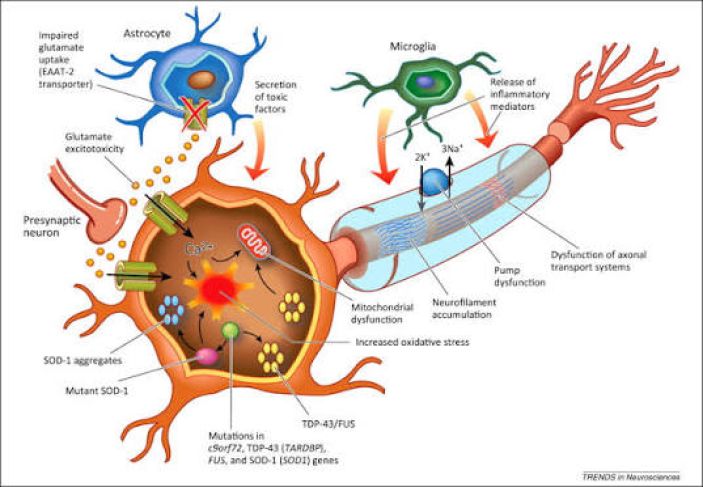
At its microscopic foundation, Primary Progressive Aphasia is not an isolated disease entity; rather, it is an outward clinical syndrome sparked by underlying cellular degradation. In roughly two out of every three individuals, the biological culprit belongs to the spectrum of Frontotemporal Lobar Degeneration. Inside these patients' brains, rogue proteins—most frequently misfolded tau filaments or abnormal deposits of TDP-43—clump into abnormal clusters within neurons and supporting glial structures. These tangled protein masses choke off standard nutrient transport, ignite neuroinflammatory responses, and ultimately trigger premature neuronal death across the frontal, anterior temporal, and insular regions of the dominant side of the brain.
In the remaining one-third of clinical encounters, the cellular culprit stems from an unusual, localized variant of Alzheimer's pathology. Instead of first damaging the hippocampus and memory circuits nestled deep in the medial temporal zones, toxic amyloid sheets and neurofibrillary tangles take root predominantly along the posterior temporoparietal border and the superior temporal ridge of the dominant hemisphere.
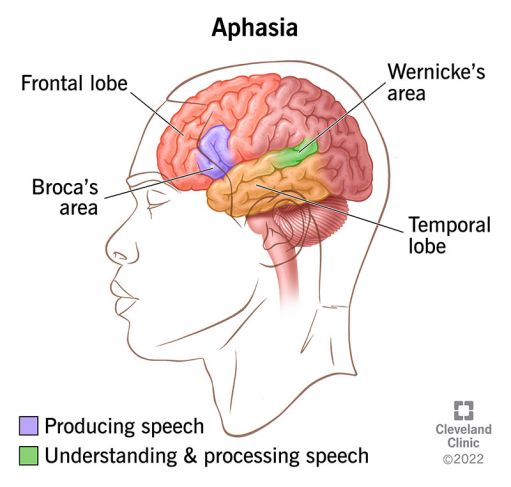
Regardless of whether abnormal tau, TDP-43, or amyloid particles lead this microscopic assault, the clinical result converges on a common outcome: focal cortical tissue shrinkage localized to the language-dominant side of the skull, which is the left hemisphere for nearly all right-handed people and the vast majority of left-handed individuals. As key hubs like Broca's territory, Wernicke's zone, the connecting arcuate bundle, and temporal semantic libraries wither, the intricate wiring needed to recall everyday nouns, string together verb tenses, steer oral muscles, and decode sentence meanings gradually breaks apart.
Three Distinct Subtypes: Divergent Roads of Linguistic Erosion
Because the brain's language machinery is distributed across distinct anatomical sectors, the exact patch where cellular degeneration first appears dictates how an individual's speech begins to falter. Contemporary diagnostic frameworks distinguish three major presentations, each leaving a distinct fingerprint on daily conversations.
The Nonfluent / Agrammatic Variant
This presentation stems from tissue loss concentrated within the posterior fronto-insular zones, directly involving Broca's speech-motor planning territory. People living with this subtype struggle immensely with the mechanical coordination required to produce clear syllables, alongside a breakdown in constructing grammatical sentences:
-
Halting Delivery: Spoken output turns slow, labored, and jerky, marked by prolonged pauses between words and frequent speech sound substitutions.
-
Stripped-Down Grammar: Elegant sentence structures collapse into telegraphic phrases, dropping small connecting words like prepositions, pronouns, and auxiliary verbs so that complex thoughts sound like clipped telegram messages.
-
Intact Understanding of Individual Words: During early stages, single-word comprehension remains largely unharmed, meaning people know exactly what is said to them even though forcing their own vocal apparatus to generate an answer requires tremendous effort.
The Semantic Variant
This subtype is driven by progressive bilateral shrinkage centered heavily in the anterior temporal lobes, which function as the mind's central encyclopedia of knowledge:
-
Vanishing Concepts: Rather than struggling to physically articulate or maintain a steady speaking cadence, affected individuals talk with fluid rhythm and clear pronunciation, yet their sentences become remarkably empty of concrete meaning.
-
Loss of Object Labels: Patients experience intense naming failures and lose the conceptual understanding of words, particularly uncommon nouns. When shown a picture of a zebra or asked to grab a spatula, they may look completely blank, having lost the internal link connecting that specific word to the physical object.
-
Spelling and Reading Irregularities: Because structural memories for irregular phonetics fade away, individuals begin sounding out irregular words purely by basic phonetics, reading complex vocabulary with awkward, literal pronunciations.
The Logopenic Variant
Most commonly associated with atypical Alzheimer's pathology, this subtype focuses its damage around the posterior perisylvian zones and the temporoparietal boundary:
-
The Search for Missing Words: Spoken conversations are interrupted by long, searching silences as the individual looks for everyday terms, although basic tongue coordination and underlying grammar stay mostly intact.
-
Short-Term Auditory Memory Strain: The core defect involves a weakened phonological memory loop, making it exceptionally frustrating to hold and repeat longer sentences or unfamiliar multi-syllable phrases.
-
Intact Conceptual Awareness: Unlike semantic presentations, individuals with logopenic challenges still fully understand what an object is and what it does; they simply run into a wall trying to pull its name out of storage while speaking.
The Personal Impact: Shifting Identities, Workplaces, and Companionship
The toll exacted by Primary Progressive Aphasia reaches far beyond formal language test scores, profoundly reshaping an individual's sense of self, vocational trajectory, and family life. Because this condition often begins earlier than standard dementias—typically appearing between ages fifty and sixty-five—individuals are frequently in the prime of their careers and raising children when early signs emerge.
Workplace Hurdles and Social Withdrawal
-
Career Complications: Fast-paced workplace tasks like composing detailed emails, speaking over telephone lines, leading group discussions, and collaborating in noisy rooms rapidly become overwhelming. Early pauses or awkward word choices are routinely brushed off as workplace burnout, sleep deprivation, or mental exhaustion before the true neurological cause is discovered.
-
Quiet Retreat from Friends: As processing speeds slow down, following vibrant dinner conversations or multi-person gatherings becomes exhausting. Individuals often withdraw from social circles to dodge embarrassment or confusion, while friends, uncertain of what to say, may unintentionally drift away.
-
Acute Emotional Awareness: Unlike typical cognitive disorders where early memory loss cushions personal awareness of one's limitations, people facing early PPA typically possess clear insight into what they are losing. Experiencing one's hard-won ability to voice opinions, crack a joke, or express love slowly slip away frequently stirs deep grief, anxiety, and depression.
Gradual Spread Beyond Speech
Throughout the initial chapters of the condition—conventionally the first couple of years—the impairment stays almost exclusively within language boundaries. Yet as cellular damage gradually reaches outward into adjoining motor, frontal, and parietal zones, additional challenges crop up. Depending on whether Frontotemporal Degeneration or Alzheimer's proteins drive the progression, late stages may bring emotional apathy, behavioral changes, trouble interpreting spatial layouts, difficulty coordinating swallow reflexes, and generalized memory decline.
Diagnostic Milestones and Practical Ways to Stay Connected
Pinpointing Primary Progressive Aphasia demands thorough clinical evaluation to rule out sudden vascular strokes, growing brain tumors, underlying psychiatric troubles, or typical memory-dominated cognitive decline.
Thorough Medical Assessments
-
Neuropsychological and Speech-Language Testing: Comprehensive batteries probe generative naming, word fluency, syntactic comprehension, single-word definitions, and sentence repetition under pressure.
-
Advanced Brain Imaging: High-resolution magnetic resonance imaging tracks subtle asymmetric cortical thinning in the language hemisphere, while metabolic PET scans detect early slowdowns in glucose burning before actual tissue loss becomes visible.
-
Biomarker Analysis: Lumbar punctures assessing spinal fluid proteins or targeted PET scans help clinicians uncover whether Alzheimer's proteins or frontotemporal processes drive the cellular damage.
Supportive Measures and Alternative Strategies
While curative treatments capable of halting this neurodegeneration remain undiscovered, thoughtful interventions can preserve personal agency and keep communication flowing:
-
Speech-Language Rehabilitation: Early therapy concentrates on maintaining practical communicative independence. Speech specialists guide patients in practicing high-frequency vocabulary, designing personalized memory books, and rehearsing tailored phrases for essential daily needs.
-
Augmentative Communication Tools: Incorporating modern tablets, text-to-voice smartphone tools, and visual picture boards before fine motor dexterity declines equips individuals to communicate even as spoken words fade.
-
Caregiver Communication Strategies: Family members and loved ones learn valuable conversational adjustments: slowing down speech delivery, offering patient silence without cutting in, framing questions around straightforward choices, cutting out background distractions, and using written prompts or hand gestures to anchor the discussion.
Conclusion: Honoring the Individual Beyond the Spoken Word
Primary Progressive Aphasia represents an exceptionally poignant neurodegenerative journey, targeting the precise bridge humans use to convey their inner experiences to the surrounding world. By gradually eroding the biological wiring that turns abstract thoughts into spoken expression, this condition tests relationships, careers, and personal identities.
Yet losing the ability to speak does not mean an individual's inner world has vanished. Long after words grow quiet, a person's inner essence, creative sensibilities, sense of humor, and capacity to share warmth remain very much alive. With early diagnostic identification, supportive speech therapy tools, assistive communication technologies, and patient, loving communication from caregivers, families can navigate this difficult terrain while keeping their loved ones deeply understood and connected.