The Silent Cascade: The Underlying Mechanism of a Myocardial Infarction
To the outside world, a heart attack—known clinically as a myocardial infarction—often appears as a sudden, unpredictable lightning bolt. A person is going about their day when, out of nowhere, they are gripped by a crushing chest pain. However, inside the hidden architecture of the cardiovascular system, a heart attack is rarely a sudden event. Instead, it is the dramatic final act of a slow, silent, and incredibly complex molecular drama that has been quietly unfolding inside the walls of the coronary arteries for decades.
At its core, a myocardial infarction is a story of metabolic starvation. It occurs when a portion of the heart muscle is suddenly deprived of oxygen-rich blood, causing the tissue to rapidly suffocate and die. To truly understand what happens inside the human body during this life-threatening crisis, we must look beyond the macro-symptoms and trace the precise cellular chain reaction that transforms a healthy blood vessel into a biological disaster zone.
The Foundation of Failure: Chronic Plaque Architecture
The journey toward a heart attack begins long before the actual event, rooted in a condition called atherosclerosis. The heart is a muscular pump that works non-stop, requiring an uninterrupted supply of oxygen. This oxygen is delivered by a network of specialized vessels called the coronary arteries.
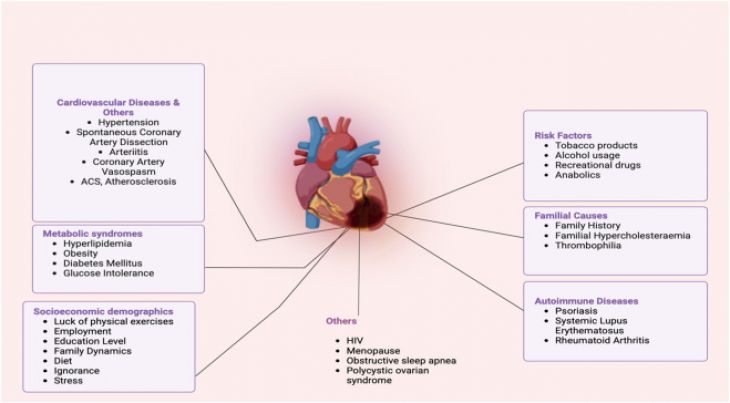
In a healthy body, the inner lining of these arteries—the endothelium—is perfectly smooth, allowing blood to glide through effortlessly. However, due to a combination of chronic stressors such as high blood pressure, elevated cholesterol levels, smoking, and systemic inflammation, this smooth lining suffers microscopic injuries.
When the endothelium is damaged, it becomes sticky. Low-Density Lipoprotein (LDL) cholesterol—often referred to as "bad" cholesterol—slips through the cracks of the injured lining and becomes trapped in the artery wall. Once inside, this cholesterol undergoes chemical oxidation, turning into a toxic irritant. The body’s immune system treats this as an emergency, dispatching specialized white blood cells called macrophages to clean up the mess.
These macrophages swallow the oxidized cholesterol but quickly become overwhelmed, swelling up and turning into bloated, dying cells known as "foam cells." Over years, this accumulation of foam cells, calcium, and cellular debris forms a fatty, gritty structure known as an atherosclerotic plaque.
The Critical Trigger: Plaque Rupture and the Clotting Cascade
Many people assume that a heart attack happens because a fatty plaque gradually grows until it pinches the artery shut like a clogged pipe. While this can happen, it only accounts for a small percentage of cases. The vast majority of myocardial infarctions are triggered by a sudden, catastrophic structural failure: plaque rupture.
As a plaque matures, the body attempts to contain it by building a protective fibrous cap over the top of the fatty core, separating it from the rushing bloodstream. Some caps are thick and stable, but others are thin, fragile, and highly inflamed. If a sudden spike in blood pressure occurs, or if local chemical inflammation degrades the structural integrity of this cap, it cracks open.
When a plaque ruptures, the highly toxic, gritty interior of the fatty core is suddenly exposed directly to the flowing blood. The body misinterprets this rupture as a massive, bleeding injury that must be patched immediately. This triggers a rapid, aggressive clotting cascade:
-
Platelet Activation: Microscopic blood cells called platelets sense the exposed core and rush to the site. They instantly change shape, sprouting tiny tentacles to bind to the damaged tissue and to each other, forming an initial physical plug.
-
Fibrin Recuitment: The body activates its chemical coagulation pathway, weaving a dense, sticky web of structural proteins called fibrin through and around the clumped platelets.
-
Thrombus Occlusion: This rapid clotting response forms a substantial blood clot, or thrombus. Within minutes, this escalating clot can completely block the entire channel of the coronary artery, shutting down the downstream blood flow with absolute finality.
The Cellular Suffocation: Ischemia and Tissue Injury
The moment the coronary artery is blocked, a ticking biological clock begins. The region of the heart muscle (myocardium) that relies on that specific artery is plunged into a state of severe ischemia—a critical lack of blood supply and oxygen.
Heart cells are incredibly metabolically active; they possess no oxygen storage tanks and require a constant supply of fuel to generate ATP, the biological energy currency that powers every heartbeat. Within just 60 seconds of zero oxygen, the affected heart muscle cells lose their ability to contract. The heart rhythm begins to falter, though the cells themselves are still technically alive.
If the blockage persists beyond 20 to 30 minutes, the damage shifts from reversible injury to irreversible cell death, known as necrosis. Starved of oxygen, the cells can no longer run their internal chemical pumps. Sodium and water rush into the cells uncontrollably, causing them to bloat and swell. Concurrently, intracellular compartments rupture, releasing highly caustic digestive enzymes into the cell's own interior. The cell systematically dissolves itself from the inside out.
The Systemic Shockwave
As the structural membranes of the dying heart cells finally rupture, they spill their internal contents into the surrounding tissue and bloodstream. Among these leaked molecules are highly specific cardiac proteins called troponins. In modern emergency medicine, measuring an elevated level of troponin in a patient's blood is the definitive molecular proof that a myocardial infarction has occurred.
As this cellular carnage expands, the dying tissue releases a massive wave of distress signals, alerting the central nervous system. The brain responds by unleashing a massive surge of adrenaline and noradrenaline. This sympathetic nervous system overload causes the heart rate to spike and blood vessels to constrict, desperately trying to maintain blood pressure to vital organs.
This extreme chemical storm is what causes the classic outward symptoms of a heart attack: a cold sweat, profound nausea, shortness of breath, and a crushing, radiating pain that signals the profound distress of a dying muscle.
The Race Against the Clock
A myocardial infarction is a dynamic, evolving event. It starts at a microscopic epicenter deep within the heart wall and expands outward over several hours. In the medical community, there is a famous maxim: "Time is muscle." If the blocked artery can be opened swiftly through emergency intervention—either by using powerful clot-busting medications or mechanically widening the artery with a balloon and stent—the boundaries of the tissue death can be heavily restricted.
However, any muscle tissue that remains starved of oxygen for too long is permanently lost. The body cannot regenerate functional heart muscle cells; instead, over the subsequent weeks, the immune system cleans away the cellular debris and replaces the dead muscle with a stiff, non-functional scar tissue. While this scar keeps the heart structurally intact, it can never contract or beat, permanently altering the heart's pumping efficiency.
Understanding this intricate, multi-layered mechanism highlights why proactive cardiovascular health—managing cholesterol, controlling blood pressure, and lowering systemic inflammation—is so vital. It allows us to intervene and stabilize the delicate inner architecture of our blood vessels long before the silent cascade ever has the chance to turn fatal.