Understanding Primary Lateral Sclerosis and Its Effects on Movement
Introduction to Motor System Architecture and Upper Motor Neuron Pathology
Initiating voluntary body movements requires an intricate, multi-tiered neural system connecting the cerebral cortex, brainstem, and spinal cord. Cortical upper motor neurons situated within the primary motor area send long axonal fibers down through the corticospinal and corticobulbar pathways to connect with lower motor neurons in the spinal anterior horn and brainstem motor nuclei. Primary Lateral Sclerosis represents a rare, adult-onset neurological condition defined by the isolated, progressive breakdown of these upper motor pathways. Unlike Amyotrophic Lateral Sclerosis, which causes rapid, simultaneous destruction of both upper and lower motor pathways, Primary Lateral Sclerosis remains restricted almost exclusively to upper motor neuron structures. As these cortical pathways progressively break down, the brain loses its ability to exert descending inhibitory control over spinal reflex loops. This loss of inhibitory signal control results in chronic muscular spasticity, pronounced hyperreflexia, muscle stiffness, and impaired motor coordination, whereas lower motor neurons and muscle bulk remain largely intact during early and intermediate stages.
Etiology and Pathophysiological Corticospinal Degeneration
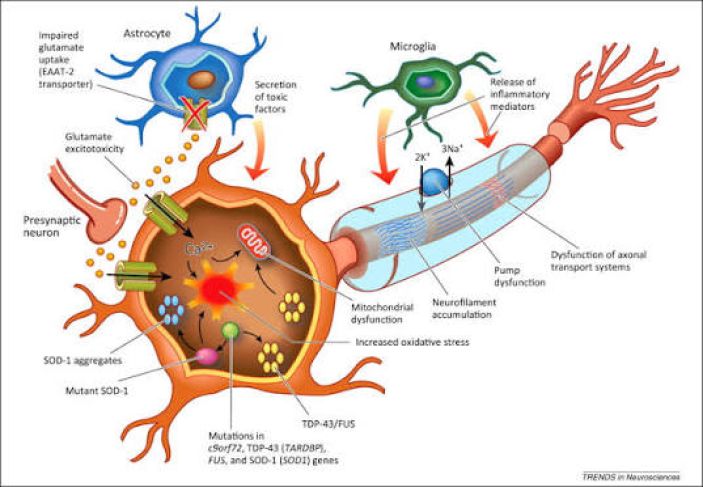
The precise molecular events that trigger selective upper motor neuron death in Primary Lateral Sclerosis remain an active area of neurobiological study. Modern pathophysiological models suggest that a combination of mitochondrial dysfunction, persistent oxidative stress, interrupted axonal transport mechanisms, and microglial-driven neuroinflammation drives disease progression. Pathological examinations show significant loss of giant Pyramidal cells (Betz cells) within the motor cortex. This loss of cortical cell bodies coincides with bilateral degeneration and secondary scarring along the descending corticospinal and corticobulbar tracts. Inside the cell, abnormal accumulations of misfolded proteins disrupt structural transport pathways. Because corticospinal axons can stretch over a meter in length, disruptions in transport mechanisms prevent essential cell components from reaching distal nerve endings, leading to a gradual, "dying-back" pattern of axonal loss.
Clinical Presentation and Spasticity Manifestations
The clinical onset of Primary Lateral Sclerosis is typically gradual, developing most often between forty-five and sixty-five years of age. Early clinical manifestations feature progressive, symmetrical stiffness and weakness in the lower limbs. Individuals frequently describe feeling a heavy sensation in their legs, experiencing a stiff gait, tripping more often, and losing leg flexibility. As cortical degeneration spreads, spasticity moves upward into the arms and hands, causing reduced manual dexterity, clumsiness during fine movements, and persistent muscle tightness. Clinical evaluation reveals hallmark upper motor neuron signs, including elevated muscle tone with clasp-knife resistance, brisk deep tendon reflexes, ankle clonus, and positive Babinski reflexes on both feet. Crucially, because lower motor neurons remain preserved throughout most of the disease, visible muscle twitching (fasciculations), rapid muscle wasting, and denervation signs are characteristically absent.
Corticobulbar Dysfunction and Pseudobulbar Effects
When the neurodegenerative process extends to corticobulbar pathways connecting the cortex to brainstem motor centers, bulbar symptoms begin to appear. Corticobulbar breakdown leads mainly to spastic speech impairment (dysarthria) and swallowing difficulties (dysphagia). Speech becomes slow, strained, slurred, and requires significant physical effort due to increased tone and reduced movement speed in the tongue, throat, and vocal cord muscles. Impaired swallowing coordination raises the risk of food stasis in the mouth, frequent choking, and accidental fluid entry into the lungs. In addition, the loss of descending corticobulbar regulation disinhibits brainstem emotional centers, triggering pseudobulbar affect. People affected by pseudobulbar affect experience sudden, uncontrollable episodes of crying or laughing that do not align with their actual emotional state, causing notable psychological discomfort and social challenges.
Diagnostic Evaluation and Differential Differentiation
Diagnosing Primary Lateral Sclerosis is complex because there are no specific blood tests or single biomarkers available, making it necessary to systematically rule out other neurological, structural, or metabolic conditions. Reaching a clear diagnosis requires applying established clinical criteria alongside extended observation over time. Magnetic Resonance Imaging (MRI) scans of the brain frequently display localized shrinking (atrophy) of the primary motor cortex and abnormal signal intensity along the descending corticospinal tracts. Electromyography (EMG) and nerve conduction studies serve a critical role by confirming that lower motor neurons are functioning normally and proving the absence of active denervation, which would otherwise suggest Amyotrophic Lateral Sclerosis. Standard blood panels, spinal fluid analysis, and genetic screening are regularly performed to rule out similar conditions, such as hereditary spastic paraplegia, multiple sclerosis, cervical spinal cord compression, infections, and metabolic deficiencies.
Multidisciplinary Management and Symptom Modulation
Because there are currently no cures or disease-reversing medications for Primary Lateral Sclerosis, medical management concentrates on controlling symptoms, preserving physical function, and providing supportive care. Pharmacological treatments for spasticity aim to lower muscle tone and ease painful cramps without creating severe whole-body weakness. Oral medications like baclofen, tizanidine, and dantrolene are commonly prescribed as first-line therapies. For individuals with severe, hard-to-control leg spasticity, an intrathecal baclofen pump can be surgically placed to deliver medication directly into the spinal fluid, reducing systemic side effects. Physical and occupational therapy are essential to maintain joint mobility, prevent painful joint tightening (contractures), improve walking safety, and introduce helpful mobility devices. Speech therapists help manage speech difficulties through articulation strategies and communication aids while testing swallowing safety to lower aspiration risks.
Prognosis and Future Research Directions
In contrast to the rapid progression seen in Amyotrophic Lateral Sclerosis, Primary Lateral Sclerosis develops over a much longer, slowly progressive timeline. While Amyotrophic Lateral Sclerosis often leads to fatal respiratory failure within three to five years, individuals diagnosed with Primary Lateral Sclerosis frequently live for many decades after their initial symptoms appear. However, ongoing motor decline eventually limits independent movement, often requiring full reliance on wheelchairs and daily care assistance. Current research focuses on discovering reliable early biomarkers—such as advanced brain imaging techniques, motor cortex volumetric measurements, and specific protein levels in spinal fluid—to distinguish Primary Lateral Sclerosis from upper-motor-neuron-dominant forms of Amyotrophic Lateral Sclerosis as early as possible. Furthermore, clinical trials testing potential nerve-protecting drugs, gene-targeted therapies, and anti-inflammatory compounds aim to slow cortical cell loss and preserve motor abilities over the long term.
Conclusion
Primary Lateral Sclerosis is a distinct, slowly evolving neurological disorder characterized by selective upper motor neuron degeneration within the motor cortex and corticospinal tracts. Understanding how the loss of these cortical pathways causes spasticity, hyperactive reflexes, speech and swallowing challenges, and motor impairment explains the functional changes experienced by patients. Combining specialized brain imaging, nerve testing, and detailed differential diagnosis enables care teams to differentiate Primary Lateral Sclerosis from more aggressive motor neuron diseases. Through structured physical therapy, targeted anti-spasticity treatments, and speech support, healthcare professionals can effectively manage symptoms, prevent secondary physical complications, and support daily functional independence for people living with this chronic motor condition.