How AI-Powered Protein Structure Prediction Is Supporting New Drug Research?
Developing a new medicine is a complex process that can take many years. Researchers need to understand how diseases affect the body, identify important biological targets, and discover substances that can act on those targets. One major challenge is understanding the shape and behavior of proteins.
Proteins perform many essential functions in the human body. They help cells communicate, control chemical reactions, fight infections, and maintain normal body functions. Their three-dimensional shapes often determine how they work.
Artificial intelligence is making it easier for scientists to predict protein structures and study their functions. AI-powered protein structure prediction is becoming an important tool in drug research because it can provide valuable information about potential drug targets and speed up early stages of medicine development.
What Is Protein Structure Prediction?
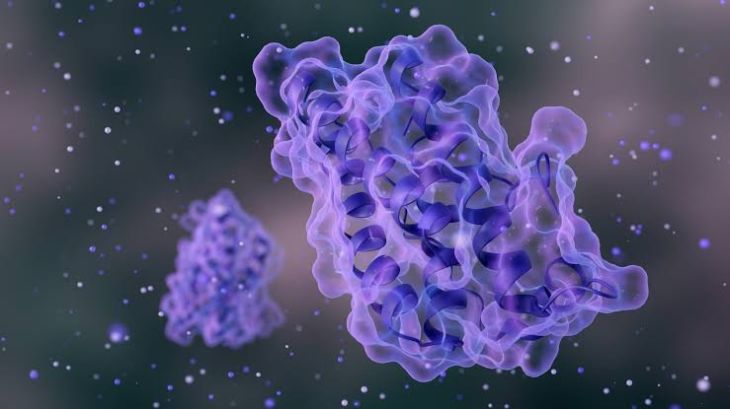
Protein structure prediction is the process of estimating how a protein folds into its three-dimensional shape.
Proteins are made from chains of amino acids. The order of these amino acids influences how the chain folds and forms a specific structure.
A protein's shape is important because it affects how the protein interacts with other molecules. For example, a medicine may need to attach to a particular area of a protein to block its activity or change how it works.
Understanding protein structures can therefore help researchers investigate diseases and identify possible ways to treat them.
How Does AI Predict Protein Structures?
Traditional protein structure research often relies on laboratory techniques such as X-ray crystallography, nuclear magnetic resonance, and cryo-electron microscopy. These methods can provide detailed structural information but may require specialized equipment, time, and resources.
AI offers another way to estimate protein structures.
Learning From Protein Data
AI systems are trained using large collections of known protein sequences and structures. They learn patterns that connect amino acid sequences with possible three-dimensional shapes.
Analyzing Amino Acid Sequences
Researchers provide a protein's amino acid sequence to an AI model. The system examines relationships between different parts of the sequence and uses learned patterns to predict how the protein may fold.
Creating a 3D Structure
The AI model produces a predicted three-dimensional representation of the protein. Scientists can examine this model to understand its possible shape, important regions, and interactions.
Checking and Improving Predictions
Researchers may compare AI predictions with experimental results and use additional laboratory studies to verify important details. This step is essential because a predicted structure is not always identical to the protein's actual shape in living cells.
How Is AI Protein Prediction Helping Drug Research?
AI-powered protein structure prediction is contributing to several areas of medicine development.
Identifying New Drug Targets
Many diseases involve proteins that become damaged, overactive, or unable to perform their normal functions.
AI-generated protein models can help researchers understand these proteins and identify areas that may be suitable for drug development.
For example, scientists studying cancer may examine proteins involved in uncontrolled cell growth. Understanding their structures can help identify possible locations where medicines could act.
Designing Potential Medicines
A medicine often works by attaching to a particular protein or changing its activity.
When researchers have information about a protein's structure, they can use computer-based methods to explore molecules that may interact with it.
AI tools can help screen large numbers of possible compounds and identify promising candidates for further testing.
However, a good predicted fit does not guarantee that a molecule will work safely or effectively in the human body.
Studying Drug Resistance
Some diseases become harder to treat when proteins develop changes that reduce the effectiveness of medicines.
AI-based structure prediction can help researchers study how these changes affect protein shapes and drug interactions.
This may provide clues for designing medicines that work against resistant forms of disease.
Researching Rare Diseases
Rare genetic conditions may involve proteins with unusual structures or functions.
AI models can help researchers examine how specific genetic changes might affect a protein. This information may reveal possible disease mechanisms and suggest new research directions.
Improving Research Speed
Laboratory experiments are still necessary, but AI can help scientists prioritize which proteins and compounds deserve further investigation.
By narrowing down research possibilities, these tools may reduce some of the time and cost involved in early drug discovery.
Examples of AI Technologies in Protein Research
Several AI systems have made important contributions to protein structure prediction.
AlphaFold: Developed by Google DeepMind, AlphaFold can predict protein structures from amino acid sequences. Its predictions have made structural information available for a large number of proteins.
RoseTTAFold: This AI system uses multiple types of information to predict protein structures and study molecular interactions.
ESMFold: Developed using large protein language models, ESMFold can predict protein structures directly from amino acid sequences.
These technologies give researchers new ways to explore protein biology and investigate potential drug targets.
Benefits of AI-Powered Protein Structure Prediction
AI-based protein research offers several advantages:
-
Faster predictions: AI can generate protein structure predictions much faster than many traditional experimental approaches.
-
Better target understanding: Predicted structures can reveal important regions of proteins.
-
More research opportunities: Scientists can investigate proteins that are difficult to study using laboratory methods.
-
Improved compound screening: Structure information can help researchers evaluate potential drug molecules.
-
Lower early research costs: Computer-based predictions may reduce the need for some initial experimental work.
These benefits can make early drug research more focused and efficient.
Challenges and Limitations
Despite its progress, AI protein structure prediction has limitations.
A predicted structure may not show how a protein behaves in every biological condition. Some proteins change shape depending on their environment or interactions with other molecules.
AI models may also struggle with certain complex protein arrangements, flexible regions, and large molecular interactions.
Most importantly, predicting a protein's structure does not automatically produce a successful medicine. Potential drugs still need laboratory testing, safety studies, clinical trials, and regulatory approval before they can be used by patients.
What Is the Future of AI in Protein-Based Drug Discovery?
Researchers are working to develop AI systems that can predict not only protein structures but also how proteins interact with medicines, DNA, RNA, and other biological molecules.
Combining AI with laboratory experiments may make it easier to design and test new compounds.
In the future, these developments could contribute to research on cancer, infectious diseases, genetic conditions, and neurological disorders. AI may also help scientists explore more personalized treatment approaches by studying biological differences between patients.
However, these technologies are tools for research and do not replace experimental validation or medical expertise.
FAQs
What is AI-powered protein structure prediction?
It is the use of artificial intelligence to estimate the three-dimensional shape of a protein from its amino acid sequence and related biological information.
Why is protein structure important in drug development?
A protein's shape affects how it interacts with other molecules. Understanding this structure can help researchers identify areas where potential medicines may attach or act.
Can AI develop medicines on its own?
No. AI can help identify drug targets, predict protein structures, and screen possible compounds. Laboratory experiments and clinical trials are still needed to establish safety and effectiveness.
What is AlphaFold used for?
AlphaFold is an AI system that predicts protein structures. Scientists use its predictions to study protein functions, disease mechanisms, and potential drug targets.
Can AI protein prediction help cancer research?
Yes. It can help researchers study proteins involved in tumor growth, cell signaling, and treatment resistance. This may contribute to the search for new cancer medicines.
Conclusion
AI-powered protein structure prediction is changing how scientists approach early drug research. By estimating the three-dimensional shapes of proteins, AI tools help researchers understand biological processes, identify possible drug targets, and explore potential medicines. Technologies such as AlphaFold, RoseTTAFold, and ESMFold are expanding access to valuable structural information. Although laboratory testing and clinical trials remain essential, combining AI with traditional research methods may make future medicine development more efficient and open new possibilities for treating complex diseases.