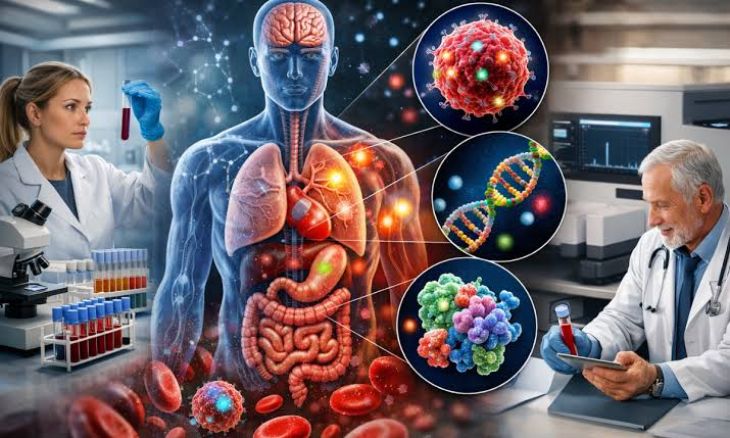
How Are Cancer Biomarkers Helping Doctors Choose More Targeted Treatments?
Cancer treatment is becoming more personalized. Instead of giving every patient the same treatment, doctors can now look at certain features of a tumor before deciding which treatment may work best.
One important tool in this process is cancer biomarkers. These biological signs can provide information about how a cancer is behaving and whether it has certain features that may respond to a particular treatment.
What Are Cancer Biomarkers?
Cancer biomarkers are measurable substances or changes found in the body that can provide information about cancer.
They may include proteins, genes, gene changes, or other biological characteristics. Biomarkers can be found in tumor tissue, blood, or other body fluids.
Doctors can use certain biomarkers to learn more about a patient's cancer and help guide treatment decisions.
How Do Biomarkers Help With Cancer Treatment?
Cancer cells can have different genetic and biological features. Two people with the same type of cancer may have tumors that behave very differently.
Biomarker testing can help identify specific changes in a tumor. If a treatment is designed to target that change, the test may help doctors decide whether the treatment could be appropriate.
This approach is part of precision medicine, which aims to match treatment more closely to the characteristics of an individual's cancer.
What Are Targeted Cancer Treatments?
Targeted treatments are medicines designed to act on specific features that help cancer cells grow, divide, or survive.
For example, some cancer cells have changes that cause certain proteins to become overactive. A targeted medicine may block that protein or the pathway it controls.
Biomarker testing can help doctors determine whether a tumor has the feature that a particular targeted treatment is designed to act on.
How Is Biomarker Testing Done?
The type of test depends on the cancer and the biomarker being studied.
Doctors may examine a sample of tumor tissue collected during a biopsy or surgery. Laboratory specialists can then look for specific proteins or genetic changes.
In some cases, doctors may use a blood test known as a liquid biopsy to look for cancer-related genetic material in the bloodstream.
Not every cancer requires the same tests. Doctors choose testing based on the type of cancer and the treatment options being considered.
Can Biomarkers Help With Immunotherapy?
Yes. Some biomarkers can help doctors determine whether a patient may be more likely to respond to certain immunotherapy treatments.
For example, doctors may test tumors for specific features related to how cancer cells interact with the immune system.
However, a biomarker result does not guarantee that a treatment will work. Cancer is complex, and many factors can affect treatment response.
Can Biomarkers Help Find the Right Treatment?
Biomarker testing can sometimes help doctors select treatments that are more closely matched to a tumor.
If testing identifies a specific target, doctors may consider medicines designed to act on that target. If a target is not present, a particular targeted treatment may be less likely to be useful.
Can Biomarkers Change During Cancer Treatment?
Yes. Cancer cells can change over time. A tumor that originally responds to treatment may later develop new changes that allow some cancer cells to survive.
Because of this, doctors may sometimes repeat biomarker testing when cancer progresses or returns.
Understanding these changes can help doctors consider whether a different treatment may be appropriate.
What Are the Benefits of Biomarker Testing?
Biomarker testing may offer several benefits:
-
It can provide more information about a tumor.
-
It may help identify treatments designed for specific cancer features.
-
It can support personalized treatment decisions.
-
It may help doctors understand why a treatment is or is not working.
-
It can sometimes identify patients who may benefit from certain clinical trials.
What Are the Limitations?
Biomarker testing is not perfect. A test may fail to detect a change that is present, or a biomarker may not accurately predict how a person will respond to treatment.
Some tumors can also contain different groups of cancer cells with different biological features.
In addition, not every biomarker has a treatment available. A test may identify a genetic change, but there may not yet be an approved medicine that targets it.
Doctors therefore consider biomarker results along with other medical information.
What Could the Future of Biomarker Research Look Like?
Researchers are discovering new biomarkers and studying how they can be used to guide cancer care.
Future testing may provide doctors with more detailed information about tumors and how they change over time. Combining biomarker testing with artificial intelligence, liquid biopsy technology, and other tools could also improve cancer research.
The overall goal is to make cancer treatment more precise while avoiding treatments that are unlikely to benefit a particular patient.
FAQs
Does every cancer patient need biomarker testing?
No. The need for testing depends on the type of cancer, its characteristics, and available treatment options.
Can biomarkers predict whether treatment will work?
Some biomarkers can provide useful information about the likelihood of responding to certain treatments, but they cannot guarantee that a treatment will work.
Are biomarker tests done using blood?
Some are. Others require tumor tissue from a biopsy or surgery. The appropriate test depends on the cancer and the biomarker being investigated.
Can biomarker testing help with targeted therapy?
Yes. Certain biomarker tests can identify changes or proteins that may be targeted by specific cancer medicines.
Can a tumor's biomarkers change?
Yes. Cancer cells can change as the disease develops or responds to treatment. Doctors may sometimes repeat testing when cancer changes or returns.
Conclusion
Cancer biomarkers are helping make cancer care more personalized. By studying genes, proteins, and other features of tumors, doctors can learn more about a patient's cancer and identify treatments that may be better matched to it.
Biomarker testing can be especially useful when targeted treatments or certain immunotherapies are being considered. However, test results are only one part of treatment planning.