What Is Aicardi Syndrome and How Can It Affect Brain Development?
Human brain development relies on billions of nerve fibers growing along precise pathways during early pregnancy so the two halves of the brain can share information seamlessly. When an unexpected genetic shift interrupts that early architectural wiring, the resulting structural changes can influence movement, vision, and cognitive growth from infancy onward. Aicardi syndrome is a rare, complex neurological disorder present from birth that almost exclusively affects biological females. Originally identified by French neurologist Jean Aicardi in the mid-twentieth century, this condition is defined by a classic trio of clinical features: partial or complete absence of the main bridge connecting the brain's two hemispheres, difficult-to-control seizures starting in infancy, and distinctive round lesions on the light-sensitive tissue at the back of the eye. Examining how this syndrome arises, the structural brain differences it creates, and the ways medical therapies support affected children helps clarify its broad impact on early neurodevelopment.
The Genetic Origins Behind Aicardi Syndrome
Unlike conditions passed steadily from parent to child across generations, Aicardi syndrome almost always arises spontaneously due to a brand-new genetic change occurring very early in embryonic development. Researchers have observed that the disorder occurs almost exclusively in girls—alongside rare cases in boys born with an extra X chromosome—pointing strongly toward a spontaneous mutation located on the X chromosome. Because females carry two X chromosomes, one healthy copy allows survival during fetal development even when the second copy carries a disruptive alteration. In contrast, males typically inherit only one X chromosome paired with a Y chromosome, meaning a severe mutation on that single X chromosome is usually incompatible with survival before birth. Because nearly every diagnosed case stems from a random, non-inherited cellular event rather than an inherited family trait, parents of an affected child generally face a very low likelihood of the condition recurring in future pregnancies.
Absence of the Corpus Callosum and Structural Brain Differences
The hallmark neurological feature of Aicardi syndrome involves an incomplete or completely missing corpus callosum—the thick, flat band of millions of nerve fibers that normally links the left and right cerebral hemispheres. In a typically developing brain, this dense neural highway enables both sides to coordinate motor movements, interpret sensory input, and integrate complex thoughts rapidly. When the corpus callosum fails to form properly during early gestation, communication between the two hemispheres becomes fragmented, forcing electrical signals to travel along slower, alternative routes. Beyond this missing central bridge, specialized brain imaging often reveals additional structural differences, including asymmetrical brain hemispheres, fluid-filled sacs known as intracranial cysts, smaller-than-average brain volume, and unusual folding patterns along the outer cerebral cortex where nerve cells migrated imperfectly before birth.
Early-Onset Seizures and Electrical Disruption
For most families, the first outward sign that something is affecting brain development appears between three and five months of age in the form of sudden, brief muscle clusters known as infantile spasms. During these episodes, an infant's head, torso, and limbs may abruptly jerk forward or stiffen in rapid succession, often occurring just as the baby wakes up or drifts off to sleep. Beneath the surface, these visible spasms reflect chaotic, disorganized electrical storms across developing neural networks—a pattern neurologists recognize on brain-wave recordings as hypsarrhythmia. Because the infant brain is rapidly forming critical connections during the first year of life, persistent, uncontrolled electrical discharges interfere directly with normal learning, visual tracking, and motor skill acquisition. Over time, infantile spasms frequently evolve into multiple stubborn seizure types that resist standard anti-seizure medications, making early, aggressive neurological management essential to protect remaining developmental potential.
Distinctive Eye Findings and Visual Processing Challenges
Alongside structural brain changes and early seizures, Aicardi syndrome produces a highly characteristic signature inside the eyes called chorioretinal lacunae. During a dilated eye examination, pediatric ophthalmologists look for multiple pale, rounded, punched-out patches scattered across the retina and underlying vascular layer. These distinctive spots represent areas where pigment and retinal tissue failed to develop fully before birth, serving as one of the clearest diagnostic clues confirming the syndrome. Depending on how close these retinal gaps sit to the central focal point of vision—and whether the optic nerve itself is underdeveloped or unusually small—affected children may experience mild visual blurring, partial blind spots, involuntary rapid eye movements, or profound visual impairment. Because early vision plays a vital role in guiding babies to reach, roll, and interact with caregivers, reduced visual clarity compounds the motor and cognitive hurdles created by the underlying brain differences.
Broader Effects on Motor Skills, Cognition, and Physical Growth
Because structural brain variations and ongoing seizure activity influence multiple nervous system pathways simultaneously, children living with Aicardi syndrome typically experience moderate to severe global developmental delays. Many babies exhibit low core muscle tone, making head control, sitting upright, crawling, or walking challenging milestones that require sustained physical therapy. Speech and expressive language are often limited, prompting families and therapists to introduce assistive communication devices, picture boards, and touch-based tools so children can express preferences and connect socially. In addition to neurological hurdles, skeletal differences such as fused vertebrae, missing ribs, and progressive spinal curvature frequently emerge as children grow, alongside feeding difficulties or digestive sluggishness that require attentive nutritional support.
Multidisciplinary Care and Ongoing Developmental Support
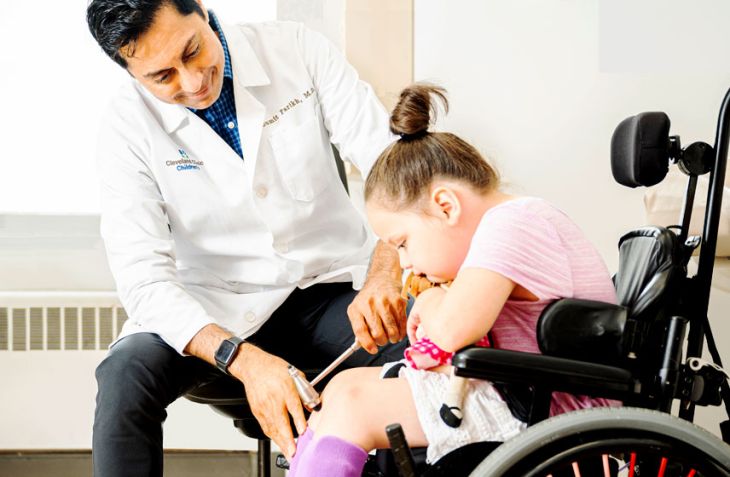
Although medical science does not yet offer a cure capable of rebuilding missing neural pathways, coordinated multidisciplinary care helps maximize comfort, safety, and developmental progress. Treatment begins with pediatric neurologists tailoring combinations of anti-seizure medications, hormonal therapies, or specialized ketogenic diets to quiet disruptive brain-wave activity as thoroughly as possible. Early intervention programs bring together physical therapists to strengthen posture and mobility, occupational therapists to refine sensory integration and daily comfort, and speech-language pathologists to build non-verbal communication bridges. Regular monitoring by pediatric ophthalmologists and orthopedic specialists addresses vision needs and spinal alignment early, while supportive family networks connect caregivers with practical guidance and emotional resilience.
Conclusion
Aicardi syndrome shapes brain development from its earliest embryonic stages by disrupting the formation of the corpus callosum, altering cortical folding, and triggering stubborn infantile seizures alongside distinctive retinal changes. Together, these structural and electrical challenges slow motor milestones, complicate visual processing, and limit spoken communication. Yet early recognition through brain imaging and specialized eye exams empowers medical teams to calm seizure activity promptly and launch targeted physical, occupational, and communication therapies. Through compassionate, multidisciplinary support tailored to each child's unique strengths, families can foster meaningful connection, comfort, and steady developmental progress every step of the way.