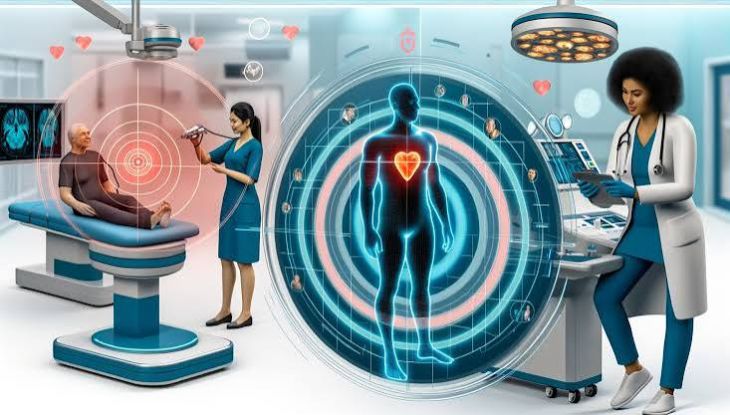
How Could AI-Powered Imaging Help Doctors Detect Diseases Earlier?
Medical imaging plays an important role in finding and understanding diseases. Doctors use tools such as X-rays, CT scans, MRI scans, and ultrasound to look inside the body without surgery.
However, some diseases can be difficult to notice, especially when changes are very small. This is where artificial intelligence, or AI, could make a difference.
AI-powered imaging systems can examine medical images and look for patterns that may be difficult for the human eye to notice. Researchers and healthcare professionals are studying how these tools could help doctors detect certain diseases earlier and make medical care more efficient.
What Is AI-Powered Medical Imaging?
AI-powered medical imaging uses computer systems trained to analyze medical images.
These systems can be trained using large collections of medical scans. Over time, an AI model can learn to recognize certain patterns linked with diseases or other medical conditions.
For example, an AI system may analyze an X-ray and identify an area that needs closer attention. A doctor can then review the image and decide what it means.
AI does not simply replace the doctor. Instead, it can act as an additional tool during the imaging and diagnosis process.
How Could AI Help Detect Diseases Earlier?
One of the biggest possibilities of AI imaging is finding subtle changes at an earlier stage.
Some diseases may cause very small changes in tissue before obvious symptoms appear. AI systems may be able to analyze large amounts of image information and highlight areas that deserve further examination.
This could be especially useful for conditions where early detection can influence treatment decisions.
However, AI results still need to be reviewed by qualified healthcare professionals.
Can AI Help With Cancer Detection?
Cancer is one area where AI-powered imaging is being widely researched.
AI systems can analyze certain mammograms, CT scans, MRI images, and other types of medical images. Researchers are studying whether these systems can identify suspicious areas and help doctors find some cancers at earlier stages.
For example, AI may help highlight an unusual area on a scan that a radiologist can examine more closely.
AI can also potentially help compare current images with previous scans, making changes over time easier to notice.
Could AI Improve Brain Disease Detection?
AI imaging is also being studied for brain conditions.
MRI and CT scans can contain large amounts of information. AI systems may help analyze these images and identify patterns associated with conditions such as strokes, brain tumors, and certain neurological disorders.
In emergency situations, faster analysis could be particularly valuable. An AI system might flag a possible abnormality so that a medical team can review it quickly.
AI should still be considered a tool rather than a final decision-maker.
How Could AI Help With Heart and Lung Problems?
AI-powered imaging may also be useful in cardiovascular and respiratory care.
For heart health, AI can be used alongside certain imaging methods to study the heart's structure and function.
For lung health, researchers are exploring AI analysis of chest X-rays and CT scans to identify abnormal areas, nodules, infections, and other changes.
The goal is not simply to find more abnormalities but to help doctors interpret medical images more efficiently and accurately.
Could AI Make Medical Scans Faster to Analyze?
Doctors and radiologists may need to review a large number of medical images every day.
AI tools can process images quickly and may help prioritize scans that appear to contain urgent findings.
This could potentially reduce delays in certain healthcare settings.
However, speed should not come at the cost of accuracy. Human review remains important, particularly when an AI system produces uncertain or unexpected results.
What Are the Benefits of AI-Powered Imaging?
AI imaging could offer several potential benefits:
-
Earlier identification of certain diseases
-
Faster analysis of medical scans
-
Help in finding subtle abnormalities
-
Better comparison between current and previous scans
-
Assistance in prioritizing urgent cases
-
More consistent analysis of certain imaging features
-
Help for doctors when reviewing large amounts of information
The exact benefits depend on the specific AI system, disease, imaging method, and healthcare setting.
What Are the Challenges?
AI-powered imaging also has limitations.
An AI system can make mistakes. If the data used to train it does not represent different populations well, its performance may vary between groups.
There are also concerns about patient privacy, data security, bias, and how AI decisions should be explained.
Another important issue is that an AI result should not be treated as a diagnosis by itself. Doctors need to consider symptoms, medical history, physical examinations, laboratory tests, and other information.
FAQs
Can AI diagnose diseases by itself?
AI can analyze medical images and identify patterns, but it should not be treated as a replacement for a qualified healthcare professional.
Can AI detect cancer from a scan?
AI can help identify suspicious patterns in some types of medical images, but further evaluation is needed to determine whether cancer is actually present.
Is AI medical imaging safe?
AI itself does not expose a person to radiation. However, the safety of the overall imaging procedure depends on the imaging method being used.
Can AI replace radiologists?
AI is generally being developed as a tool to assist healthcare professionals rather than completely replace them.
Will AI make disease detection faster?
In some situations, AI may help doctors analyze and prioritize medical images more quickly. Its effectiveness depends on the technology and clinical setting.
Conclusion
AI-powered medical imaging is an exciting area of healthcare research. By analyzing medical scans and identifying patterns, AI could help doctors notice certain diseases earlier, review images faster, and focus attention on areas that may need further investigation.