SGLT2 Inhibitor Medicines: Renal Glucose Transport, Glycosuria, and Cardiorenal Care
The human kidneys play an indispensable role in systemic energy conservation and plasma glucose stability through continuous glomerular filtration and selective tubular reclamation. Every day, healthy adult kidneys filter roughly one hundred and eighty liters of plasma across the glomerular capillary bed, delivering approximately one hundred and eighty grams of dissolved glucose directly into the nephron lumen. Under physiological conditions, virtually none of this filtered glucose appears in excreted urine because specialized epithelial cells lining the proximal convoluted tubule reclaim almost every molecule back into the peritubular bloodstream. When chronic insulin resistance or pancreatic beta-cell dysfunction elevates blood glucose levels in diabetes mellitus, the kidney paradoxically adapts by upregulating its glucose-reclaiming machinery, exacerbating systemic hyperglycemia rather than excreting the surplus sugar. SGLT2 Inhibitor Medicines—clinically designated as sodium-glucose cotransporter-2 inhibitors or gliflozins—represent a breakthrough class of oral metabolic therapeutics that selectively block renal glucose reabsorption, enabling the body to eliminate excess glucose directly through the urine. Understanding how these agents lower blood sugar while delivering profound cardiovascular and renal protection requires examining renal glucose transport physiology, molecular cotransporter inhibition, osmotic and hemodynamic adaptations, clinical indications, and safety precautions.
Physiology of Renal Proximal Tubular Glucose Reabsorption
Because glucose is a polar, hydrophilic molecule incapable of passively diffusing across lipid-rich renal epithelial membranes, its reclamation from the urinary filtrate depends entirely on active transmembrane carrier proteins. Two distinct sodium-glucose cotransporters—SGLT2 and SGLT1—work sequentially along the proximal convoluted tubule to recover filtered glucose. Located exclusively within the brush-border apical membrane of the early S1 and S2 segments of the proximal tubule, SGLT2 is a high-capacity, low-affinity cotransporter responsible for reabsorbing approximately ninety percent of all filtered glucose. SGLT2 operates via secondary active transport: it harnesses the steep inward electrochemical sodium gradient maintained by basolateral sodium-potassium adenosine triphosphatase (Na+/K+-ATPase) pumps to transport one sodium ion alongside one glucose molecule across the apical membrane into the tubular cell. Once concentrated inside the epithelial cytoplasm, glucose exits passively across the basolateral membrane into the interstitial space and peritubular capillaries via facilitative glucose transporter 2 (GLUT2). Further downstream in the S3 segment of the proximal tubule, SGLT1—a low-capacity, high-affinity cotransporter coupling two sodium ions to one glucose molecule—scavenges the remaining ten percent of filtered glucose, ensuring complete urinary glucose conservation up to a plasma renal threshold of roughly one hundred and eighty milligrams per deciliter.
Molecular Mechanism of SGLT2 Inhibition and Therapeutic Glycosuria
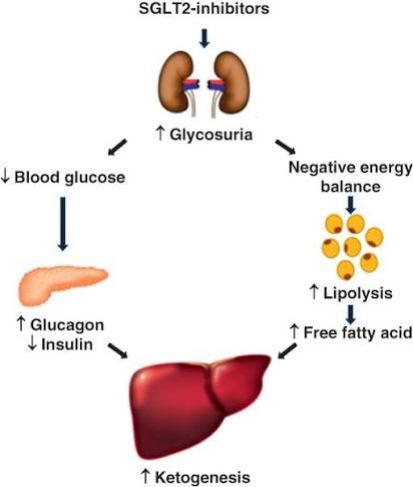
Derived structurally from phlorizin—a natural dihydrochalcone compound isolated from apple tree bark—modern synthetic SGLT2 inhibitors such as empagliflozin, dapagliflozin, canagliflozin, and ertugliflozin exhibit potent, selective, competitive inhibition of the SGLT2 protein. Following oral absorption, these medications circulate in the bloodstream, undergo glomerular filtration, and bind with high affinity to the extracellular glucose-binding domain of SGLT2 along the proximal tubular lumen. By occupying this transport site, SGLT2 inhibitors prevent the cotransporter from undergoing the conformational shift required to translocate sodium and glucose into the tubular cell. Consequently, the renal threshold for glucose excretion drops dramatically from approximately one hundred and eighty milligrams per deciliter down to roughly forty to eighty milligrams per deciliter. Although downstream SGLT1 transporters partially compensate by increasing their glucose uptake capacity, roughly fifty to eighty grams of excess glucose remain unabsorbed each day and are excreted directly into the urine—a controlled physiological state termed therapeutic glycosuria. Crucially, because SGLT2 inhibition operates independently of pancreatic insulin secretion or peripheral insulin sensitivity, it lowers fasting and postprandial blood glucose concentrations effectively across all stages of type 2 diabetes while carrying a minimal intrinsic risk of causing hypoglycemia when administered without insulin or sulfonylureas.
Metabolic Consequences: Caloric Loss, Weight Reduction, and Lipid Shifts
Beyond lowering glycated hemoglobin levels, sustained urinary excretion of fifty to eighty grams of glucose daily imposes a continuous net energy deficit of approximately two hundred to three hundred kilocalories per day. Over several months of treatment, this ongoing caloric loss promotes modest, durable reductions in total body weight—averaging two to three kilograms—predominantly through reductions in visceral and subcutaneous adipose tissue rather than lean muscle mass. At the cellular metabolic level, persistent glycosuria shifts whole-body substrate utilization away from carbohydrate oxidation toward fatty acid beta-oxidation and mild physiological ketogenesis. Lower circulating insulin-to-glucagon ratios stimulate adipose tissue lipolysis, increasing hepatic production of beta-hydroxybutyrate—an energy-efficient ketone fuel readily utilized by stressed myocardial and renal tubular cells. Additionally, SGLT2 inhibition enhances urinary uric acid excretion via altered proximal tubular urate transporter (GLUT9) exchange, lowering serum uric acid concentrations and reducing vascular oxidative stress.
Hemodynamic and Cardiorenal Protective Mechanisms
Landmark clinical outcome trials have established that SGLT2 inhibitors markedly reduce heart failure hospitalizations, cardiovascular mortality, and chronic kidney disease progression—benefits observed even in patients without diabetes mellitus. These profound protective effects stem from synergistic hemodynamic and cellular mechanisms rather than glucose lowering alone. Within the nephron, blocking coupled sodium and glucose reabsorption in the early proximal tubule increases sodium chloride delivery downstream to the macula densa cells of the juxtaglomerular apparatus. Sensing elevated luminal sodium chloride, the macula densa restores normal tubuloglomerular feedback by releasing adenosine, which induces vasoconstriction of the dilated afferent glomerular arteriole. This physiological adjustment lowers intraglomerular capillary hypertension, reduces hyperfiltration-induced mechanical stress on podocytes, and decreases albuminuria. Simultaneously, mild osmotic diuresis and natriuresis reduce intravascular plasma volume and interstitial fluid overload without activating deleterious neurohormonal sympathetic reflexes, lowering systemic systolic blood pressure, reducing cardiac preload and afterload, and improving myocardial energetics.
Clinical Adverse Effects and Risk Mitigation Strategies
While SGLT2 inhibitors are broadly well tolerated, increasing urinary glucose concentration and altering renal fluid balance introduce predictable clinical side effects requiring proactive patient education. Elevated glucose levels within the lower urinary tract provide a nutrient-rich environment that increases theincidence of superficial genital mycotic infections—such as vulvovaginal candidiasis and balanitis—and, less commonly, urinary tract infections, which are mitigated through routine genital hygiene. Osmotic diuresis can precipitate intravascular volume depletion, orthostatic hypotension, or transient initial declines in estimated glomerular filtration rate, particularly in elderly patients or those taking loop diuretics. A rare but serious metabolic complication is euglycemic diabetic ketoacidosis (euDKA), wherein reduced insulin dosing, acute illness, prolonged fasting, or surgical stress trigger accelerated lipolysis and ketogenesis despite near-normal blood glucose readings. Consequently, clinicians advise temporarily holding SGLT2 inhibitors prior to major surgery or during acute dehydrating illnesses and monitoring serum or urine ketones if symptoms such as nausea, abdominal pain, or malaise develop.
Conclusion
SGLT2 inhibitor medicines represent a paradigm shift in metabolic, cardiovascular, and renal pharmacotherapy by targeting the kidney's proximal tubular glucose reabsorption machinery rather than relying on insulin secretion. Understanding how selective blockade of high-capacity SGLT2 cotransporters induces controlled urinary glucose excretion clarifies their ability to lower blood glucose, promote caloric weight loss, restore tubuloglomerular feedback, and unload the failing heart and hyperfiltering kidney. Utilizing proactive patient counseling regarding hydration, hygiene, and sick-day medication holds enables clinical teams to prevent genital infections, volume depletion, and euglycemic ketoacidosis. Through integrated glycemic control alongside robust heart failure and kidney protection, SGLT2 inhibitors have redefined standard-of-care therapy across contemporary internal medicine.