Bispecific Antibody Medicines: Dual Antigen Recognition and Immune Cell Targeting
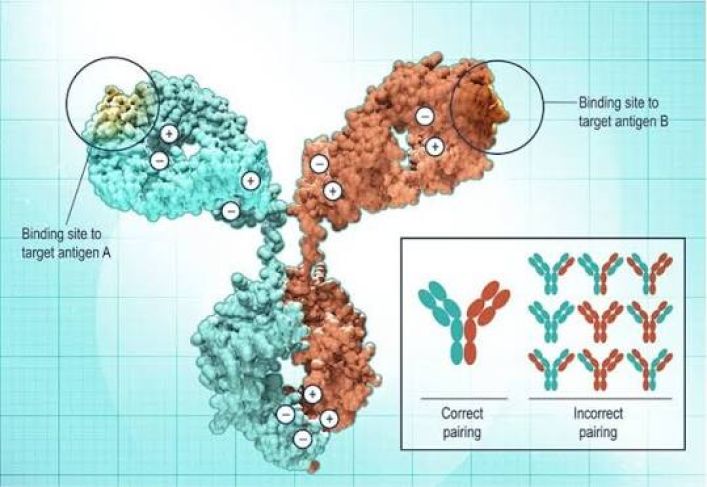
Conventional immunoglobulin G (IgG) antibodies generated by human B-lymphocytes are symmetrical, monospecific glycoproteins equipped with two identical binding arms that attach to a single molecular target. While standard monospecific monoclonal antibodies have reshaped modern oncology and autoimmune medicine by neutralizing soluble cytokines, blocking growth receptors, or marking abnormal cells for innate immune clearance, single-target strategies frequently encounter biological resistance. Rapidly adapting tumor cells routinely escape monospecific blockade by shedding surface targets, mutating receptor epitopes, or cultivating immunosuppressive microenvironments that exclude cytotoxic T-lymphocytes—killer immune cells that lack Fc receptors and therefore cannot be recruited by traditional antibodies. Bispecific Antibody Medicines overcome these barriers through deliberate protein engineering, combining two distinct antigen-binding specificities within a single synthetic molecule so it can bind two separate targets at once. Understanding how these dual-action biologics guide immune effector cells onto diseased targets and shut down parallel survival pathways requires examining their structural designs, immune synapse mechanics, dual-receptor blockade strategies, therapeutic applications, and toxicity safeguards.
Structural Designs: Fragment Constructs Versus Full-Length IgG Formats
Because natural immune cells do not assemble antibodies with two different binding specificities, manufacturing stable bispecific therapeutics relies on recombinant protein engineering to prevent improper pairing of heavy and light polypeptide chains. Modern clinical bispecific antibodies fall into two primary architectural families: compact fragment-based constructs lacking a constant Fc tail, and full-length IgG-like molecules that retain an Fc domain. Fragment-based designs, widely represented by Bispecific T-Cell Engagers (BiTEs), join two distinct single-chain variable fragments—each formed from paired variable heavy and light domains—using a short, flexible amino acid linker. Lacking an Fc region gives these constructs a small molecular weight near fifty-five kilodaltons, allowing rapid diffusion into dense tissues and tight physical bridging between cells, though rapid kidney filtration necessitates continuous intravenous infusion. Conversely, full-length IgG-like bispecifics retain the Fc stalk through structural modifications such as complementary heavy-chain mutations, shared light chains, or domain-swapping techniques. Preserving the Fc domain enables salvage recycling via neonatal Fc receptors, extending bloodstream persistence to weeks for convenient intermittent dosing while allowing engineers to silence Fc reactivity and prevent off-target immune activation.
Immune Cell Redirection and Cytolytic Synapse Assembly
The hallmark mechanism driving bispecific antibody medicines in cancer immunotherapy is obligate immune cell redirection—physically anchoring cytotoxic killer cells directly onto malignant cells without requiring conventional antigen presentation. Normally, cytotoxic CD8-positive T-lymphocytes identify abnormal cells only when specific peptide fragments are displayed on surface major histocompatibility complex (MHC) class I molecules, a visibility mechanism tumors frequently silence to evade immune detection. T-cell-redirecting bispecifics bypass MHC restriction altogether: one binding arm latches onto a surface marker expressed on malignant cells—such as CD19, CD20, B-cell maturation antigen (BCMA), or GPRC5D—while the opposing arm binds the invariant CD3 epsilon subunit of the T-cell receptor complex. Tethering both surface proteins pulls the T-cell and tumor cell into immediate membrane contact, organizing an artificial cytolytic synapse. Clustering CD3 signaling subunits triggers intracellular phosphorylation cascades that awaken resting polyclonal T-cells, prompting rapid proliferation, local cytokine secretion, and directional release of perforin and granzyme B proteins that puncture the target cell membrane and initiate programmed cell death. Analogous bispecific engagers also recruit natural killer cells by linking tumor antigens to activating CD16A receptors.
Dual-Pathway Blockade and Biparatopic Receptor Downregulation
Beyond physically bridging killer lymphocytes to tumor cells, bispecific antibodies are engineered to execute simultaneous dual-pathway inhibition on diseased cells or blood vessels—a non-obligate strategy that prevents compensatory signaling escape. Many solid malignancies survive single-receptor drug therapy by routing growth signals through parallel receptor tyrosine kinases that keep proliferative cascades active. Dual-blocking bispecifics bind two distinct growth receptors on the same tumor cell concurrently, such as epidermal growth factor receptor (EGFR) and mesenchymal-epithelial transition factor (MET), halting both ligand-driven and ligand-independent signaling while accelerating receptor internalization and intracellular breakdown. In ophthalmology, dual-targeting biologics neutralize both vascular endothelial growth factor-A (VEGF-A) and angiopoietin-2 (Ang-2) simultaneously to calm abnormal blood vessel growth and leakage inside the retina. Additionally, biparatopic bispecific constructs recognize two separate, non-overlapping regions on the exact same surface protein—such as human epidermal growth factor receptor 2 (HER2)—promoting dense receptor cross-linking, stronger complement activation, and deeper target degradation than administering two separate monoclonal antibodies together.
Clinical Applications Across Oncology, Hematology, and Vascular Care
Bispecific antibody medicines have achieved regulatory approval across diverse blood cancers, solid tumors, and non-malignant conditions. In B-cell acute lymphoblastic leukemia, CD19-by-CD3 constructs eliminate stubborn residual leukemic cells following chemotherapy. Across relapsed or refractory diffuse large B-cell lymphoma and follicular lymphoma, CD20-by-CD3 bispecific agents deliver high rates of durable complete remission as immediately available off-the-shelf infusions without requiring personalized patient cell harvesting. Similarly, bispecifics targeting BCMA or GPRC5D alongside CD3 have expanded treatment options for heavily pretreated multiple myeloma. Within solid-tumor care, dual EGFR-and-MET antibodies treat specific exon-20-mutated non-small-cell lung cancers, peptide-HLA-by-CD3 fusion constructs extend survival in metastatic uveal melanoma, and DLL3-by-CD3 engagers target neuroendocrine small-cell lung cancer. Outside oncology, factor-bridging bispecific antibodies mimic missing coagulation factor VIII activity to prevent bleeding episodes in hemophilia A, while dual anti-angiogenic bispecifics preserve vision in neovascular macular degeneration and diabetic macular edema.
Immune-Mediated Toxicities and Clinical Safety Protocols
Because immune-redirecting bispecific antibodies trigger vigorous polyclonal lymphocyte activation throughout the bloodstream and tumor sites, clinicians must anticipate and manage distinct class-related inflammatory side effects. The most frequent acute reaction is Cytokine Release Syndrome (CRS), caused by activated T-cells and neighboring macrophages releasing large waves of interleukin-6, interferon-gamma, and tumor necrosis factor-alpha, resulting in fever, chills, low blood pressure, rapid heart rate, and low oxygen levels shortly after dosing. A second recognized risk is Immune Effector Cell-Associated Neurotoxicity Syndrome (ICANS), presenting with speech hesitation, confusion, tremor, or seizures linked to blood-brain barrier inflammation. Furthermore,prolonged clearance of normal antibody-producing B-cells or plasma cells can lower protective immunoglobulin levels and increase susceptibility to respiratory or viral infections. Care teams minimize these hazards through gradual step-up dosing schedules that safely prime T-cells, corticosteroid premedications, rapid administration of interleukin-6 receptor blockers such as tocilizumab, and preventive immunoglobulin replacement when needed.
Conclusion
Bispecific antibody medicines represent a major advance in targeted biologics, uniting two distinct antigen-binding arms within a single engineered protein to link immune killer cells directly to diseased targets or silence redundant cellular pathways. Understanding how fragment-based constructs and Fc-modified IgG molecules cross-link CD3 receptors to assemble cytolytic synapses explains their ability to destroy tumor cells independently of MHC antigen display. Applying stepwise dose escalation, early cytokine blockade, and infection prophylaxis enables medical teams to manage inflammatory reactions and neurotoxicity safely. Across hematologic malignancies, solid tumors, and chronic vascular or clotting disorders, bispecific antibodies provide versatile, ready-to-use precision immunotherapy.