The Inherited Blueprint: Genetic Predisposition and Family History in Heart Attack Risk
When we discuss the risk factors for a heart attack, the conversation almost instantly centers on lifestyle choices. We talk about the foods we eat, how often we exercise, whether we smoke, and how we manage daily stress. While these controllable variables are undeniably critical, they only tell half the story. Deep within the nucleus of every cell lies an inherited biological blueprint that quietly shapes our cardiovascular destiny.
A person can run marathons, maintain a pristine plant-based diet, and still suffer a myocardial infarction (heart attack) due to an invisible, underlying vulnerability written into their DNA. Understanding the powerful role of genetic predisposition and family history is not about accepting a fatalistic future; rather, it is about uncovering your personal hidden risk profile so you can take highly targeted, proactive measures to rewrite your health outcome.
Defining the Legacy: Genetics vs. Family History
While the terms "genetics" and "family history" are frequently used interchangeably, they represent two distinct facets of cardiovascular risk in preventive medicine.
Genetic predisposition refers to the specific, inherited DNA variations that alter how your body processes fats, manages inflammation, or regulates blood pressure. A heart attack is rarely caused by a single mutated "heart attack gene." Instead, it is a polygenic trait—meaning it is driven by the subtle, combined influence of hundreds of tiny variations across your entire genome.
Family history, on the other hand, is a broader umbrella. It encompasses not only your shared genetic code but also the shared environment, dietary habits, socioeconomic factors, and lifestyle behaviors passed down through generations. When a physician asks about your family history, they are looking for a behavioral and biological mirror of your current internal environment.
What Constitutes a "High-Risk" Family History?
Not all family histories of heart disease carry the same weight. Clinical cardiologists look for very specific patterns to determine if a patient's familial risk is genuinely elevated:
-
Premature Heart Disease: This is the ultimate red flag. A family history becomes highly significant if a first-degree male relative (father or brother) suffered a heart attack before the age of 55, or if a first-degree female relative (mother or sister) experienced one before the age of 65. Heart attacks that occur late in life are often driven by aging and lifestyle, whereas early-onset events point squarely to a strong genetic driver.
-
The Power of Proximity: First-degree relatives share roughly 50% of their DNA with you, making their health history incredibly predictive. Having one first-degree relative with early heart disease can double your personal risk. If you have multiple close relatives who have suffered heart attacks, your risk can skyrocket by three- to four-fold.
-
Gender-Specific Dynamics: Interestingly, research indicates that having a mother or sister with premature heart disease often carries a slightly higher predictive risk for offspring than having a male relative affected, highlighting the intricate genetic maternal pathways in cardiovascular development.
The Hidden Mechanisms: How DNA Drives Risk
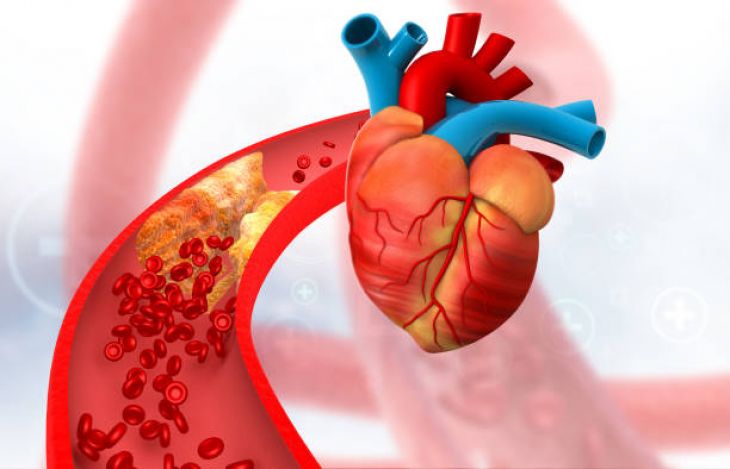
How exactly does an inherited genetic blueprint translate into a physical blockage inside a coronary artery? Your genes dictate the fundamental rules of your metabolic and vascular biology, influencing several key mechanisms:
-
Lipid Processing and FH: Some individuals inherit genes that make it impossible for their livers to clear cholesterol from the blood efficiently. The most severe form of this is Familial Hypercholesterolemia (FH), a genetic disorder that causes dangerously high LDL ("bad") cholesterol levels from birth, leading to aggressive plaque buildup in early adulthood.
-
Lp(a)—The Hidden Particle: Lipoprotein(a), or Lp(a), is a specific type of cholesterol particle that is highly sticky and prone to causing blood clots and arterial plaque. Unlike standard LDL, your Lp(a) levels are nearly 100% determined by your genetics and cannot be altered by diet or exercise.
-
Arterial Architecture and Inflammation: Your genes control how flexible and resilient your blood vessel walls are, as well as how aggressively your immune system responds to minor cellular irritation. Some people possess a genetic predisposition to high systemic inflammation, which makes any plaque they do develop highly volatile and prone to sudden rupture.
The Intersection of Nature and Nurture: Epigenetics
Discovering that you have a heavy genetic predisposition or a family history of premature heart attacks can feel incredibly discouraging. However, modern medical science offers immense reassurance through the field of epigenetics—the study of how environmental factors and daily habits cause certain genes to be switched "on" or "off."
Your genes may load the proverbial gun, but your lifestyle pulls the trigger. Having a high genetic risk profile does not mean you are guaranteed to have a heart attack; it simply means your margin for error is much smaller than someone with a clean family history.
Landmark clinical studies have shown that individuals with the highest genetic risk scores can cut their actual, real-world risk of suffering a heart attack by more than 50% simply by adhering to a favorable lifestyle. This means that proactive habits—such as maintaining regular physical activity, avoiding tobacco, controlling body weight, and managing stress—act as a powerful biological buffer, effectively silencing the harmful cardiovascular genes you may have inherited.
Taking Action on Your Genetic Profile
If you are aware of a pattern of early heart attacks in your lineage, your approach to preventive healthcare must be proactive rather than reactive. Knowing your history allows you to collaborate with healthcare providers to establish advanced screening protocols early in life.
Instead of relying solely on basic cholesterol panels, individuals with a family history should request advanced biomarkers, such as an Lp(a) blood test, an ApoB assessment, and high-sensitivity C-reactive protein (hs-CRP) to evaluate systemic inflammation. In many cases, specialized imaging like a Coronary Artery Calcium (CAC) scan can look directly inside the chest to see if silent plaque has already begun to form.
Ultimately, your family history and genetic predisposition are not a clinical sentence, but an invaluable road map. By uncovering these hidden inherited vulnerabilities early, you gain the precise knowledge required to outsmart your DNA—allowing you to implement aggressive, personalized preventive strategies that protect your cardiovascular system and safeguard your longevity for decades to come.