Use of Turmeric in Wound Healing
For thousands of years, across vast ancient civilizations, the bright golden-yellow rhizome known as turmeric (Curcuma longa) has held a sacred place in the art of healing. Long before modern medicine could identify bacteria under a microscope or explain the complex biological cascade of cellular repair, battlefield healers and traditional medicine practitioners were applying crushed turmeric roots to open wounds, burns, and skin infections. Today, contemporary medical science is validating what these ancient cultures knew through intuition and experience: turmeric is a remarkably sophisticated, natural multi-tool for skin regeneration and defense.
When the skin barrier is broken, the body immediately initiates a race against time. It must simultaneously stop bleeding, keep harmful environmental microbes from entering the tissue, and assemble a microscopic construction crew to rebuild the flesh. Turmeric, packed with its primary bioactive polyphenol called curcumin, steps into this chaotic environment as a stabilizing force. It accelerates the body's natural healing timeline while acting as an invisible, protective shield against opportunistic pathogens.
The Three Pillars of Golden Healing
To fully appreciate how turmeric aids an injured body, it helps to break down its actions into three distinct, overlapping phases. While synthetic ointments usually focus on just one aspect of wound care—such as killing bacteria—turmeric manages the entire healing ecosystem.
-
Taming the Inflammatory Fire: Immediately after an injury, the body floods the area with inflammatory chemicals. While this initial response is necessary to clear out debris, prolonged inflammation stalls healing and causes excessive pain and scarring. Turmeric acts as a natural thermostat, downregulating key inflammatory markers like NF-κB and cyclooxygenase-2 (COX-2). By cooling this inflammation, it allows the wound to transition into the rebuilding phase much faster.
-
Building the Collagen Scaffold: Once the wound site is stable, the body must lay down new structural tissue. Turmeric directly stimulates fibroblasts—the specialized cells responsible for producing collagen. It helps organize these fresh collagen fibers into a tight, orderly matrix, which not only closes the wound faster but also significantly improves the tensile strength of the new skin, reducing the appearance of deep scars.
-
Spurring New Blood Vessels (Angiogenesis): Freshly repaired tissue has a massive appetite for oxygen and nutrients. Turmeric encourages the localized expression of transforming growth factor-beta (TGF-β), a protein that triggers the growth of microscopic new blood vessels. This enhanced blood flow delivers the essential building blocks right to the front lines of the injury.
A Shield Against Infection
The greatest threat to a healing wound is the invasion of pathogenic bacteria and fungi. Once an open wound becomes colonized by harmful microbes, the healing process grinds to a halt, and the risk of systemic infection rises. Turmeric stands out as an exceptional topical defense system due to its broad-spectrum antimicrobial properties.
One of turmeric’s most valuable traits is its ability to fight highly resistant strains of bacteria, such as Staphylococcus aureus (the primary culprit behind common skin and staph infections). Curcumin molecules physically bind to the outer cell walls of these bacteria, weakening their structure until the bacterial cells leak and rupture.
Furthermore, bacteria often protect themselves by spinning a slimy, protective shield over a wound, known as a biofilm. These biofilms act like microscopic bunkers, rendering standard antibiotics ineffective. Turmeric penetrates and breaks down these biofilms, preventing bacteria from communicating and establishing a permanent foothold in the damaged tissue.
Practical Methods: Bringing Turmeric to the Medicine Cabinet
While turmeric is incredibly versatile, utilizing it for wound care requires clean execution and an understanding of how to maximize its properties:
-
The Traditional Healing Paste: For minor cuts, scrapes, or insect bites, mixing high-quality organic turmeric powder with a small amount of sterile water, raw honey, or coconut oil creates an instant soothing salve. Honey and coconut oil bring their own natural antibacterial properties, working in harmony with the turmeric to keep the wound moist and clean.
-
The Protective Dressing: In many traditional practices, a clean cloth or gauze is dusted with turmeric powder before being wrapped around an injury. This not only keeps external dirt away from the broken skin but ensures a slow, continuous release of curcumin into the underlying tissue.
-
Internal Support: Healing happens from the inside out. Drinking turmeric milk ("golden milk") or taking a bioavailable turmeric supplement provides the rest of the body with systemic antioxidant support, keeping the immune system primed to handle any minor pathogens that try to breach the skin's defenses.
Navigating the Staining and Absorption Realities
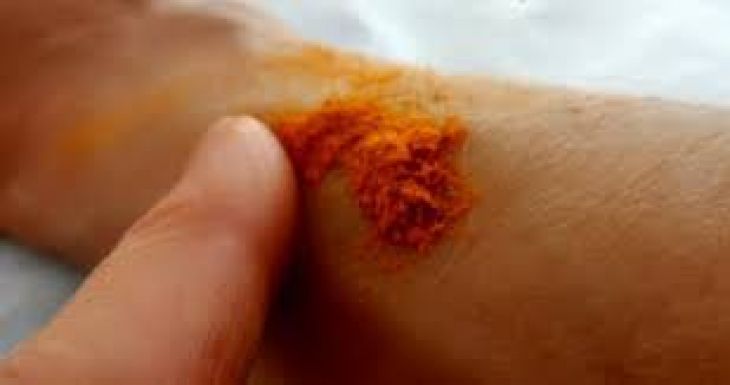
Using turmeric on the skin does come with a couple of distinct, practical quirks. The most obvious is its intense pigment. Turmeric will temporarily stain the skin a bright yellow-orange and will permanently dye light-colored clothing or bandages. While this can look alarming, the skin discoloration is harmless and washes away naturally with soap and water within a day or two.
On a biological level, raw curcumin is notorious for its poor solubility in water, which can make it tricky for the body to absorb through intact skin. However, when applied to an open wound where the protective top layer of skin is broken, or when mixed with a lipid-rich carrier like coconut oil or ghee, its ability to penetrate and interact with damaged cells increases dramatically.
Harnessing Nature's Resilience
In an era where modern medicine is increasingly challenged by superbugs and antibiotic-resistant infections, looking back at time-tested botanical solutions is no longer just an alternative practice—it is a scientific necessity. Turmeric is a brilliant example of nature's capacity for complex, multi-layered healing. It does not force the body into an unnatural state; instead, it gently removes the roadblocks of excessive inflammation and microbial infection, allowing our inherent cellular intelligence to repair, rebuild, and renew itself with efficiency and strength.