How Robotics Is Advancing Modern Surgery
Procedures that once needed big cuts and long hospital stays can now often be done through smaller openings, thanks to advanced technology.One of the most important developments in this field is robotic-assisted surgery.Instead of replacing surgeons, these robotic systems are made to support them by giving greater precision, control, and better views during complicated procedures.
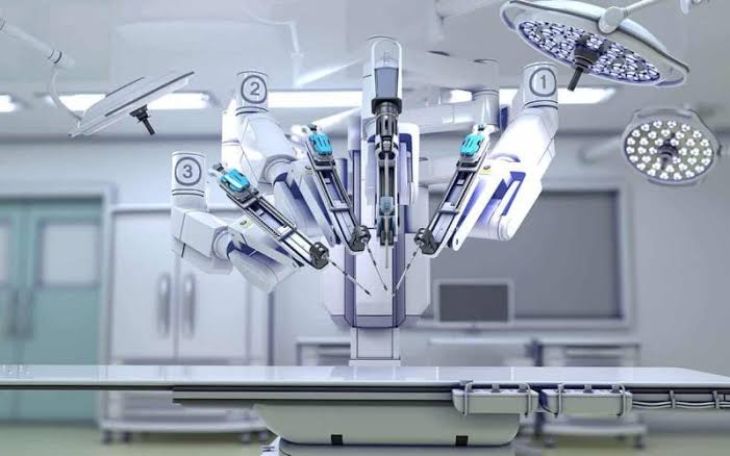
Robotic systems let surgeons operate instruments from a console while seeing a highly magnified image of the surgical area.
The technology can turn the surgeon’s hand movements into carefully controlled movements of tiny instruments.This is especially useful when working in small or hard-to-reach areas of the body.As technology keeps improving, robotic surgery is becoming part of modern healthcare in areas such as urology, gynecology, general surgery, and some forms of heart and cancer surgery.However, it’s important to understand both its benefits and limitations.
Greater Precision and Control During Complex Procedures
One of the biggest advantages of robotic-assisted surgery is the level of precision it can provide during certain procedures.
Traditional surgery relies heavily on the surgeon’s ability to control instruments directly.Robotic systems add another layer of technology by allowing surgeons to manipulate very small instruments with controlled movements.Many robotic platforms also give surgeons a magnified, three-dimensional view of the operating area.This visualization can make it easier to spot small anatomical structures and work carefully around important tissues.The instruments can also be designed to move with flexibility that may be difficult to achieve with conventional tools.Another important feature is movement scaling.In some systems, larger movements made by a surgeon’s hands can be translated into smaller instrument movements.This may help improve control when extremely delicate movements are required.
These advantages can be especially useful in operations involving narrow spaces or complex anatomical structures.
However, robotic technology does not make surgery automatically safer or more successful.Outcomes still depend on the type of procedure, the patient’s condition, the surgeon’s experience, and the healthcare team.The robot is therefore best understood as a sophisticated tool.The surgeon remains responsible for planning and performing the operation, while the robotic system provides technological assistance.
Smaller Incisions Can Support Faster Recovery
Robotic surgery is commonly associated with minimally invasive techniques.
Instead of making one large incision, surgeons may use several smaller openings through which specialized instruments and a camera are inserted.Smaller incisions can have several potential benefits.Depending on the procedure and the patient, they may result in less tissue disruption, reduced postoperative discomfort, smaller scars, and a shorter recovery period compared with some traditional open operations.A camera attached to the surgical system can provide a detailed view of the operating field.Surgeons can use this image while controlling instruments from a console.This combination of visualization and precise instrument control can help surgeons perform procedures through relatively small access points.
Recovery, however, is not identical for every patient.
The length of hospital stay and return to normal activities depend on the type of surgery, the patient’s overall health, and whether complications occur.It is also important to remember that minimally invasive surgery is not appropriate for every situation.Some operations may still require traditional open surgery because of their complexity, emergency nature, or the patient’s individual medical needs.For suitable patients, robotic-assisted minimally invasive surgery can offer an important alternative to conventional approaches.The decision should always be made by the surgical team after considering the expected benefits and risks.
Expanding Applications Across Different Medical Fields
Robotic technology is being used across several areas of medicine, and its applications continue to develop.
Urology has been one of the major fields in which robotic-assisted procedures have become widely used.Surgeons may use robotic systems for certain prostate, kidney, and bladder operations.Gynecological surgery is another area where robotic platforms can assist with selected procedures.Depending on the condition, robotic techniques may be considered for operations involving the uterus and other pelvic structures.In general surgery, robotic systems can be used for certain procedures involving the digestive system, gallbladder, hernias, and other abdominal conditions.Some hospitals also use robotic assistance in selected thoracic and cardiac procedures.Cancer surgery is another important area of development.In some cases, surgeons need to remove tumors while carefully preserving nearby healthy structures.
The Future of Robotic Surgery and Intelligent
The future of robotic surgery is closely connected with developments in imaging, artificial intelligence, computer science, and medical engineering.
Researchers are exploring ways to make surgical systems more responsive, informative, and adaptable.Artificial intelligence may eventually assist surgical teams by analyzing medical images, identifying anatomical structures, or providing information during procedures.However, these technologies are intended to support clinical decision-making rather than replace the judgment and responsibility of qualified medical professionals.Another area of development is improved feedback.Traditional robotic systems may provide surgeons with excellent visual information, but researchers are working on technologies that could improve the sense of touch and pressure during procedures.
Conclusion
Robotic-assisted surgery is changing modern healthcare by giving surgeons advanced tools for precision, visualization, and minimally invasive procedures.
Its greatest value lies not in replacing doctors but in helping skilled surgical teams perform selected operations with greater control.