How Organ-on-a-Chip Technology Is Changing Medical Research
Medical researchers have traditionally used laboratory experiments, animal studies, and simple cell cultures to learn about diseases and test possible treatments.
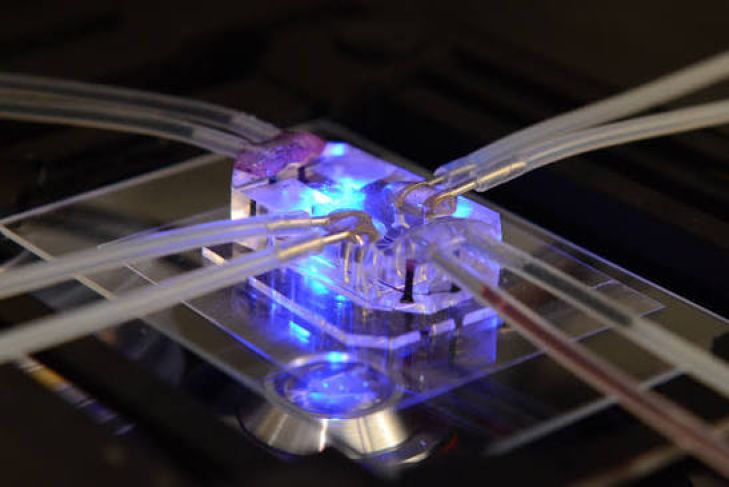
While these methods have made significant contributions to modern medicine, they each have their limits when trying to recreate the complex environment of the human body.Organ-on-a-chip technology is becoming an exciting new approach that may help overcome these limitations.An organ-on-a-chip is a small device designed to mimic certain aspects of a human organ or tissue.These devices often contain living human cells placed inside tiny channels that can control factors like fluid flow, nutrient supply, mechanical forces, and chemical exposure.Rather than trying to copy an entire organ, a chip focuses on recreating specific biological functions that scientists want to study.This technology is gaining popularity because it can offer a more realistic experimental setting than many traditional cell cultures.Researchers are looking into its potential for studying diseases, testing medicines, understanding biological processes, and developing more personalized treatment options.
Organ-on-a-Chip Creates More Realistic Models of Human Biology
Traditional cell cultures are helpful because they let scientists observe cells in a controlled lab setting.
But cells grown in a dish may behave differently from those in the human body.Real organs consist of many different cell types that communicate with each other and are affected by blood flow, physical forces, chemical signals, and surrounding tissues.Organ-on-a-chip systems try to recreate some of these conditions within small devices.A chip can have microscopic channels through which fluids move, allowing scientists to imitate parts of circulation or the movement of substances through tissues.Based on the design, a system can also simulate mechanical actions.For instance, a model inspired by the lungs may be designed to mimic the stretching forces during breathing.This lets researchers watch how living human cells respond to controlled changes in their environment.Some systems even combine different cell types to study interactions that are hard to observe in standard lab cultures.The aim isn’t to build a complete miniature human organ.Instead, scientists focus on reproducing key functions that are relevant to their research question.This makes organ-on-a-chip technology a versatile tool for studying human biology on a smaller scale.
The Technology Could Improve Drug Development and Testing
Creating a new medicine is a long and costly process.
Scientists need to find out if a potential treatment works and whether it causes harm.Before a medicine can be tested in people, researchers use lab and preclinical studies to gather evidence about its behavior and safety.Organ-on-a-chip technology might add another useful step to this process.A chip with human cells can be exposed to a candidate medicine while scientists monitor how the cells respond.They can study how tissues react to different concentrations and observe changes that may show whether the medicine is effective or harmful.Some experimental setups also connect different organ models, aiming to mimic interactions between organs and eventually help researchers understand how a substance moves through and affects different parts of the body.This could be especially useful because a medicine might look promising in a simple lab model but act differently in a more complex biological environment.Human-cell-based chip systems might offer more insights before researchers move to later stages of development.However, organ-on-a-chip technology isn’t a full replacement for all existing research methods.These systems have their own limitations, and scientists are still figuring out how reliable their results are when applied to real human responses.
Disease Research Can Become More Detailed and Personalized
Understanding disease often requires researchers to examine how cells interact with their surroundings.
A regular cell culture might show what happens to isolated cells, but it may not accurately reflect the physical and biological conditions found in diseased tissue.Organ-on-a-chip models can provide scientists with a more controlled environment for studying specific disease processes.They can use human cells to recreate selected features of conditions affecting organs like the lungs, liver, heart, kidneys, or intestines.
They can then watch how tissues react when they are exposed to factors that cause disease or to possible treatments.
Another key area is personalized medicine.In some research projects, scientists can use cells taken from individual patients and put them into experimental models.This helps researchers understand how a specific person’s cells react to different treatments.
Despite its promise, organ-on-a-chip technology still has several challenges to overcome before it can be widely used.
One big issue is standardization.Different labs may use different chip designs, cell types, materials, and methods, which makes it hard to compare results between studies.Another challenge is capturing the full complexity of human organs.While a chip may mimic some functions, real organs have many interconnected systems that are hard to recreate in a small device.The immune system, nervous system, blood flow, metabolism, and long-term biological changes may need more detailed modeling.
The quality of cells used is also crucial.
Researchers need reliable and consistent sources of cells to get meaningful results.Keeping living cells alive in an artificial setting for long periods needs special equipment and skills.Cost and availability can also be obstacles.Creating and using advanced chip systems often needs specialized labs and trained professionals.
In conclusion, organ-on-a-chip technology is creating new ways to study human biology by combining living cells with controlled lab environments in small models.
By mimicking parts of organs, these models offer researchers new tools to study diseases and test potential medicines.This technology is especially promising because it can help overcome some of the limits of traditional cell cultures.Models using human cells may provide more realistic biological data, and systems made from patient cells could eventually support more personalized approaches to research.