How Could AI Foundation Models Improve Medical Imaging?
Medical imaging plays an important role in finding and understanding many health conditions. Doctors use X-rays, CT scans, MRI scans, and ultrasound images to examine the body's internal structures and identify signs of disease.
However, analyzing medical images can be complex and time-consuming. Some abnormalities are difficult to detect, and different conditions may produce similar patterns.
What Are AI Foundation Models?
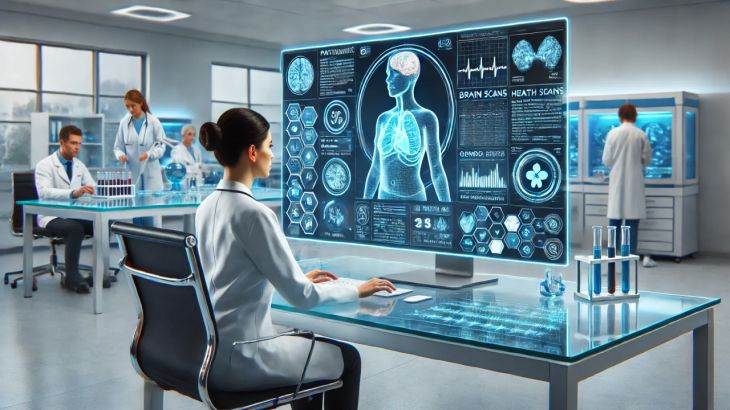
AI foundation models are large AI systems trained on broad datasets so they can perform or adapt to a range of tasks.
In medical imaging, these models may be trained using X-rays, CT scans, MRI scans, pathology images, or combinations of medical images and related text.
Unlike an AI system designed for only one specific task, a foundation model may be adapted for several applications, such as identifying abnormal tissue, comparing images, or helping organize medical reports.
However, a model trained on general images may not work reliably with medical scans without suitable training, testing, and clinical validation.
How Do AI Foundation Models Work in Medical Imaging?
These models learn patterns from large collections of images. During training, they may identify relationships between image features, anatomical structures, and disease-related changes.
When given a new image, a trained model can use what it has learned to perform a specific task. The exact capabilities depend on its design and training data.
The process often involves the following steps:
Image collection: Researchers gather suitable medical images and, where needed, related clinical information.
Model training: The AI learns patterns from the available data.
Task adaptation: Developers adjust the model for a specific purpose, such as detecting lung abnormalities or identifying structures in an MRI scan.
Performance testing: Researchers evaluate the model using separate data to measure its accuracy and identify weaknesses.
Clinical evaluation: The system must be assessed in real medical settings before it can be relied upon for patient care.
How Could AI Foundation Models Help Detect Diseases?
One promising use is identifying image patterns associated with different diseases.
For example, AI models may be trained to flag suspicious areas on chest X-rays, identify possible abnormalities in brain scans, or detect unusual tissue patterns in medical images.
These tools could help radiologists focus their attention on areas that need closer examination. They may also help prioritize scans that require urgent review.
However, an AI-generated finding is not the same as a confirmed diagnosis. Doctors must consider the patient's symptoms, medical history, examination results, and other relevant tests.
Could AI Foundation Models Improve Cancer Diagnosis?
Cancer diagnosis often depends on identifying small changes in tissues or organs. These changes may be subtle, especially in early disease.
AI foundation models could help analyze mammograms, CT scans, MRI images, and digital pathology slides. Depending on the model and its validation, they may help identify suspicious regions, compare tissue patterns, or organize images for further review.
Researchers are also studying how AI can combine information from different types of medical images to build a more complete picture of a tumor.
These applications may improve the consistency and speed of image analysis. However, performance can vary between cancer types, hospitals, imaging equipment, and patient groups. AI should not replace appropriate clinical judgment.
What Role Could AI Play in Radiology?
Radiologists review many images as part of their daily work. Foundation models could potentially assist with several tasks beyond identifying abnormalities.
They may help with image segmentation, which involves outlining organs or specific areas of tissue. They could also help compare scans taken at different times, highlight changes, or assist with drafting parts of imaging reports.
In the future, carefully validated systems may help reduce some repetitive tasks and allow medical professionals to spend more time interpreting complex cases and discussing findings with patients.
The actual benefits will depend on how well the technology fits into clinical workflows.
What Are the Benefits of AI Foundation Models in Medical Imaging?
AI foundation models may offer several advantages:
Faster image review: Some tasks may be completed more quickly with AI assistance.
Detection of subtle patterns: Models may identify image features that deserve closer attention.
Adaptability: Certain models can be adjusted for different imaging tasks.
Consistency: AI may apply the same analysis process across large numbers of images.
Research opportunities: Scientists can use these models to explore patterns linked to diseases and treatment outcomes.
These benefits are potential advantages, not guarantees. Each system needs to be tested for its intended use.
What Challenges Must Be Addressed?
Despite their potential, AI foundation models face important challenges.
Data quality and bias: If training data do not represent different ages, populations, diseases, and imaging systems, the model may perform less reliably for some patients.
Incorrect predictions: AI may miss an abnormality or flag a healthy area as suspicious. Both types of errors can affect medical decisions.
Privacy concerns: Medical images contain sensitive information and must be handled securely.
Limited transparency: Some models make predictions without providing clear explanations for their results.
Clinical validation: A model that performs well in a research study may not work equally well in every hospital. Independent testing and ongoing monitoring are important.
What Is the Future of AI Foundation Models in Medical Imaging?
Researchers are exploring models that can work with multiple types of medical images and combine imaging findings with clinical information. Some systems are also being developed to assist with medical reporting and image-based research.
As the technology advances, AI foundation models may become more useful in screening research, disease monitoring, treatment planning, and clinical decision support.
Their wider adoption will require strong evidence of safety, reliable performance across patient groups, privacy protections, and clear responsibility for medical decisions.
FAQs
What is an AI foundation model in healthcare?
It is an AI system trained on broad datasets that can be adapted for different healthcare tasks, including medical image analysis.
Can AI foundation models replace radiologists?
No. These systems are intended to assist medical professionals. Radiologists remain responsible for interpreting findings in the context of the patient's overall health.
Can AI detect cancer in medical images?
Some AI systems can identify patterns associated with certain cancers, but their accuracy varies. A suspicious result usually requires professional assessment and may need additional tests.
Are AI foundation models already used in hospitals?
AI-based medical imaging tools are already used for certain clinical tasks. However, the availability and approval of foundation models vary, and many applications remain under research or evaluation.
Are AI medical imaging systems always accurate?
No. They can make mistakes, produce false alarms, or miss abnormalities. Testing, clinical oversight, and ongoing monitoring are essential.
Conclusion
AI foundation models could change medical imaging by helping researchers and doctors analyze complex images, identify disease-related patterns, and explore new diagnostic methods. Their ability to adapt to different tasks offers exciting possibilities for radiology, cancer research, and disease monitoring. However, reliable performance, patient privacy, and clinical validation remain essential. When used responsibly alongside medical expertise, these models may become valuable tools in the future of healthcare.