How 3D Bioprinting Could Help Create Replacement Tissues
The human body has a remarkable ability to heal some injuries, but there are limits to what it can fix.
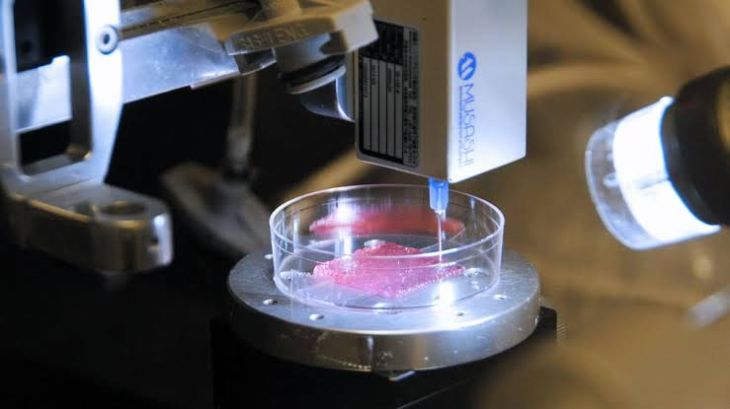
Serious injuries, diseases, burns, or surgeries can cause damage that the body can’t repair quickly enough.Traditional treatments include donor tissues, implants, or organ transplants, but donor tissues are in short supply, and transplants may not always be available when needed.These challenges have led researchers to look for new options in regenerative medicine, including 3D bioprinting.This innovative technology uses special printers to place living cells and supporting materials in precise patterns.Unlike regular 3D printing, which uses non-living materials like plastic or metal, bioprinting focuses on creating biological structures that can interact with the body.Scientists are studying whether this could one day help make replacement skin, cartilage, bone, blood vessels, and more complex tissues.While there are still many challenges, progress in cell biology, biomaterials, imaging, and printing is making this possibility more real.
How 3D Bioprinting Builds Biological Structures
At its simplest, 3D bioprinting works by placing biological materials layer by layer, following a digital design.
This process usually starts with a detailed plan of the tissue structure, which can come from medical imaging, lab measurements, or computer models.
A key part of the process is the bioink — a special material used to print with.
Bioinks are made to hold living cells and can include cells, water-rich gels, proteins, or other biological elements.The material needs to be sturdy enough to keep the shape while allowing the cells to survive and function.Different printing methods can be used, depending on the tissue.Some use tiny droplets, while others push the bioink through a nozzle.More advanced techniques might use light or other methods to make very detailed structures.
Potential Uses in Skin, Bone, and Cartilage Repair
Some of the most promising uses of bioprinting involve tissues that are simpler in structure than full organs.
Skin is one such example.Scientists are working on printed skin that could be used to treat serious burns or wounds.The printed tissue could be designed to cover damaged areas and encourage healing.
Bone is another area being studied.
Bone has a strong structure, and researchers are looking into using bioinks to create scaffolds that help bone-forming cells grow and take shape.These methods could help repair certain bone defects.
Cartilage is also being explored because it has limited natural ability to repair itself.
Cartilage damage, especially in joints, can lead to long-term issues.Bioprinting might allow scientists to make cartilage-like structures with shapes that match specific parts of the body.One advantage of using digital manufacturing is the ability to customize the printed tissue for individual needs.
Why Blood Vessels and Living Cells Are So Important
Making replacement tissue becomes more complex as the tissue gets thicker and more detailed.
One big challenge is getting cells the oxygen and nutrients they need.In the body, blood vessels deliver these essentials and remove waste.If a printed tissue is too thick and doesn’t have a good blood vessel network, the cells might not survive.That’s why researchers are working on ways to include or encourage the development of tiny blood vessels in engineered tissues.
Bioprinting offers an exciting possibility because it allows different materials and cell types to be placed in carefully planned patterns.
Researchers can create channels or patterns that may eventually support a blood supply.Some methods also use cells that naturally form blood vessels.Another challenge is making sure that the printed cells act like their natural counterparts.Cells need the right signals, environment, and interactions with other cells.Putting cells together doesn’t automatically create functional tissue.That’s why scientists are combining bioprinting with other tissue engineering techniques.
Challenges Before Bioprinted Tissues Become Routine Treatments
Even though 3D bioprinting has a lot of promise, there are still several scientific and practical problems that need to be solved before it can be used widely in medicine.
One big problem is keeping the cells healthy during the printing process.Cells are very sensitive, so things like pressure, temperature, chemicals, or other printing conditions can harm them if they’re not controlled properly.Another issue is accuracy.Human tissues have very complex structures, including small blood vessels, nerves, connective tissues, and different types of cells.It’s really hard to copy this level of detail, especially when trying to make bigger tissues.The materials used in bioprinting also need to be carefully checked.A bioink must be easy to print but also safe for living cells and, if needed, for the patient’s body.It should not cause any harmful reactions or break down in a bad way.Long-term safety is also important.Scientists need to figure out how the printed tissues work once they are inside the body and whether they keep doing their job over time.
Conclusion
3D bioprinting could become an important tool in regenerative medicine by helping scientists design replacement tissues using living cells and supporting materials.
This technology offers a new way to repair tissues by combining digital design, cell biology, biomaterials, and precise manufacturing.Scientists are already looking into using it for areas like skin, bone, cartilage, and blood vessels.One exciting possibility is customization.Instead of using standard-shaped implants, future systems might be able to create structures that are made to fit the specific needs of a patient’s damaged tissue.This could make regenerative treatments more personalized.However, bioprinting is not yet a simple solution for replacing all types of human tissue.Complex organs have many different cell types, complicated blood vessel systems, nerves, and specialized structures.